Bitcoin Miner Hosting: How to Choose a Hosting Offer in 2026
To choose a Bitcoin host, compare what each offer actually lets you run, monitor and get back. The price per kWh matters, but it has to be weighed against extra fees, uptime, maintenance and the provider’s commitments.
A useful comparison starts with the same ASIC, the same period and the same assumptions. It then relies on documents: the quote, the uptime measurement method, the intervention procedure and the exit terms.
If you are new to how the service works, start with our ASIC hosting guide to understand the basics and get started. Here, the goal is to select one offer among several professional solutions.
Compare the real cost on a like-for-like basis

Before putting two prices side by side, set a common baseline: ASIC model, operating power, comparison period, currency and tax treatment. Also check whether the price covers energy only or some hosting services as well.
Separate recurring costs from one-off fees. Installation, shipping or contract exit must stay visible: an offer that looks attractive month to month can require more cash up front. A refundable deposit ties up money, but it is not automatically a sunk cost.
An example with the S21+ Hydro
The Startmining product page for the S21+ Hydro 358 TH/s lists a power draw of 5,370 W, or 5.37 kW. The energy rate shown for Iceland on September 15, 2026 is $0.063/kWh. That rate alone does not describe all of the project’s costs.
For an illustrative calculation over 30 days of continuous operation, or 720 hours:
- Energy consumed: 5.37 × 720 = 3,866.40 kWh.
- Energy cost: 3,866.40 × 0.063 = $243.58.
The calculation assumes constant power and excludes other fees. It uses a 30-day month; a tool based on 730 hours per month or an invoice based on actual consumption will give a different amount. Use the same convention for every offer.
Why a lower rate can cost more
Take two entirely fictional proposals, for the same consumption and with services assumed to be equivalent. They are neither Startmining quotes nor a comparison of real providers.
| Monthly cost item | Offer A | Offer B |
|---|---|---|
| Energy rate | $0.063/kWh | $0.065/kWh |
| Energy for 3,866.40 kWh | $243.58 | $251.32 |
| Hypothetical service fee | $10.00 | $0.00 |
| Total of compared items | $253.58 | $251.32 |
| Equivalent per kWh, fee included | ≈ $0.06559 | $0.06500 |
Results are calculated without intermediate rounding, then shown to the cent for amounts and to five decimal places for the per-kWh equivalent. Here, offer B costs just over $2 less per month, despite its higher energy rate.
The method is reproducible: equivalent per kWh = total fees included in the comparison ÷ corresponding consumption. It puts fees on a common basis; it does not turn a flat fee into a contractual rate.
A gap of just over $2 is not, on its own, a reason to choose: services were assumed equivalent in order to isolate the effect of the flat fee. With two real offers, you then need to compare uptime, included interventions and the commitments that come with that cost.
For your final decision, add the items missing from this example: pool fees, repairs, installation, shipping or taxes, depending on the project. If some amounts are billed in euros and others in dollars, also state the exchange rate used and its date.
Read the uptime behind the headline percentage

An advertised uptime needs a precise scope. Site power availability, cooling availability and your ASIC’s actual activity do not measure exactly the same thing. An ASIC can be down while the infrastructure remains available.
So ask which period is observed, which outages are counted and whether the figure is a target, a measured track record or a contractual commitment.
Over a 365-day year, here is the theoretical equivalent of each percentage:
| Uptime | Equivalent downtime over the year |
|---|---|
| 99% | 3.65 days |
| 98% | 7.30 days |
| 95% | 18.25 days |
| 90% | 36.50 days |
These figures predict neither how often incidents occur nor how long each one lasts. They give a scale for comparing rates that are calculated the same way.
What effect on costs and production?
Under identical network conditions, downtime reduces the work performed and expected production. Its effect on costs depends on the contract: energy billed only when consumed falls with activity, whereas a flat fee or reserved capacity may still be owed.
In our example of 5.37 kW at $0.063/kWh, 95% uptime over 30 days comes to 3,673.08 kWh, or $231.40 of energy. This assumes zero consumption during downtime and billing on actual usage; it is not a rule that applies to every contract.
Look at expected production, avoidable costs and fixed charges together. When revenue no longer covers avoidable costs, stopping can limit losses. Conversely, a failure during a period of positive margin can cost the owner useful income.
Assess maintenance all the way to restart
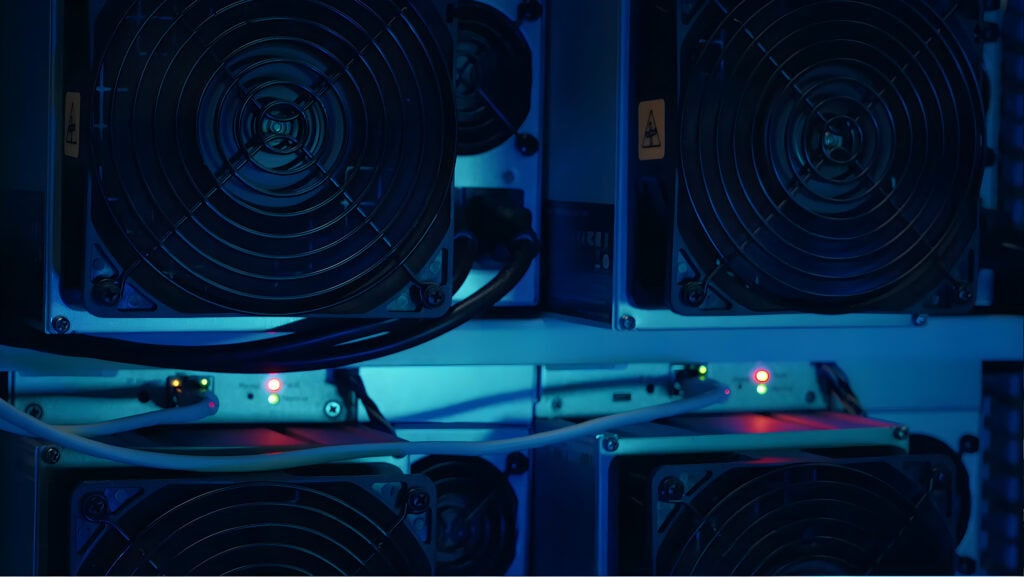
An on-site team is worth examining, but it is not enough to judge the quality of an intervention. The comparison should cover the whole chain: detection, diagnosis, repair decision and return to production.
A response time is not necessarily a repair time. Likewise, a maintenance service may cover certain operations without including parts or shipping to a specialized repair center.
For each offer, get clear answers on:
- which operations are included and which trigger a quote;
- the approval process before a paid repair;
- access to parts and heavy repairs;
- the updates sent to the owner until the ASIC restarts.
A documented procedure lets you assess what will happen in the event of a failure. A generic phrase such as “maintenance included” still leaves too many open questions.
Use a common grid for every offer
The following five dimensions give you a reading framework. For each answer, distinguish the stated condition from the evidence available.
| Dimension | Question to answer | Useful document or data |
|---|---|---|
| Cost and predictability | How much will you pay, for which services, and how can it change? | Quote, price list, sample invoice and revision rule. |
| Infrastructure | Is the site suited to the ASIC, and is its uptime documented? | Site specifications, measurement scope and relevant track record. |
| Maintenance | How do you get from a failure back to service? | Procedure, defined timeframes and allocation of costs. |
| Contract | Which rights and responsibilities govern operation and exit? | Applicable contract, hardware identification and return terms. |
| Transparency | Can you verify activity and payouts? | Monitoring demo, pool data and accessible history. |
To go further with this grid, our ASIC Hosting Score provides a 100-point rating. It is a method developed by Startmining, not an independent certification or a guarantee of results.
The score makes trade-offs easier to read. It should not hide a decisive uncertainty, such as poorly documented ownership or vague terms for retrieving the hardware.
How much weight should you give the country and market scenarios?
Compare the site and the proposed terms first
Location is a way to examine the concrete context of the project: shipping, access to interventions, billing and the contract framework. Two offers in the same country can come with very different services and terms.
Use the country to ask precise questions about the site. A general reputation or a favorable climate does not replace the documents and measurements specific to the offer.
Test the same assumptions for every host
Once the data is collected, compare the offers in a common scenario, then vary the parameters that could change your decision:
- a lower BTC price, to measure its effect on revenue in fiat terms;
- higher network difficulty, to examine a less favorable expected production for the same work;
- reduced uptime or a repair, keeping each offer’s billing rules;
- a price revision, where the contract provides for one.
The Startmining calculator helps you build these assumptions. Add the fees specific to the quote to its results if the tool does not include them.
Separate operating cost from cost including hardware
To calculate an operating cost per BTC, divide operating costs by the amount of BTC produced over the same period. State which items you include: energy, services, maintenance, pool fees or repairs. If you use production already net of pool fees, do not count those fees a second time.
For a cost including hardware, add a share of the purchase price allocated to that period under an explicit convention. For example, straight-line allocation requires choosing a useful life and any residual value; these assumptions must be the same for all the offers compared. They guarantee neither the ASIC’s lifespan nor its resale price.
Avoid charging the entire purchase to a few weeks of production while comparing the result with the operating cost alone of another offer. Payback is tracked separately, from the project’s cumulative cash flows: a favorable operating cost does not mean the ASIC has already paid for itself.
Final points to settle before you commit
The grid above is for comparing offers. Before selecting your provider, make sure the decisive points behind your choice are formalized:
- The amount payable and how it can change are established. The quote separates fees, prepayments and deposits, with the corresponding services.
- Key commitments appear in the applicable documents. A sales answer on uptime or interventions must be consistent with the contract.
- You know what happens in the event of an incident. Contacts, responsibilities and any fees are identified.
- Ownership, monitoring and retrieval of the ASIC are documented. Access and exit terms match your understanding of the offer.
Any point that is still unclear deserves an answer before you commit. Our guide to mining hosting contract clauses takes this check further, without repeating the full contract analysis here.
Choose on documented terms
Pick the offer whose advantages and limits you can explain for your project. A higher cost can be justified by a useful, documented service; a lower price can be the better option if its terms already meet your needs.
Before deciding, go back to what really sets your options apart and get the remaining uncertainties cleared up. An overall score or an attractive price is not enough if a decisive commitment remains vague.
Want to compare a Startmining solution against your criteria? Browse our offers, then let’s discuss the terms and the points to clarify for your project.
Explore Startmining hosting solutions.
Go from intuition to scenario
Before you decide, compare your scenarios with real assumptions for kWh price, uptime and ASIC model.
- Open the Startmining Pro calculator.
- Compare Startmining’s ASIC and hosting offers.

Passez à l'action
Ready to mine Bitcoin with Startmining?
Browse our ASIC shop or simulate your profitability in real time.