Iceland, Land of AI: How Crypto Mining Funds AI
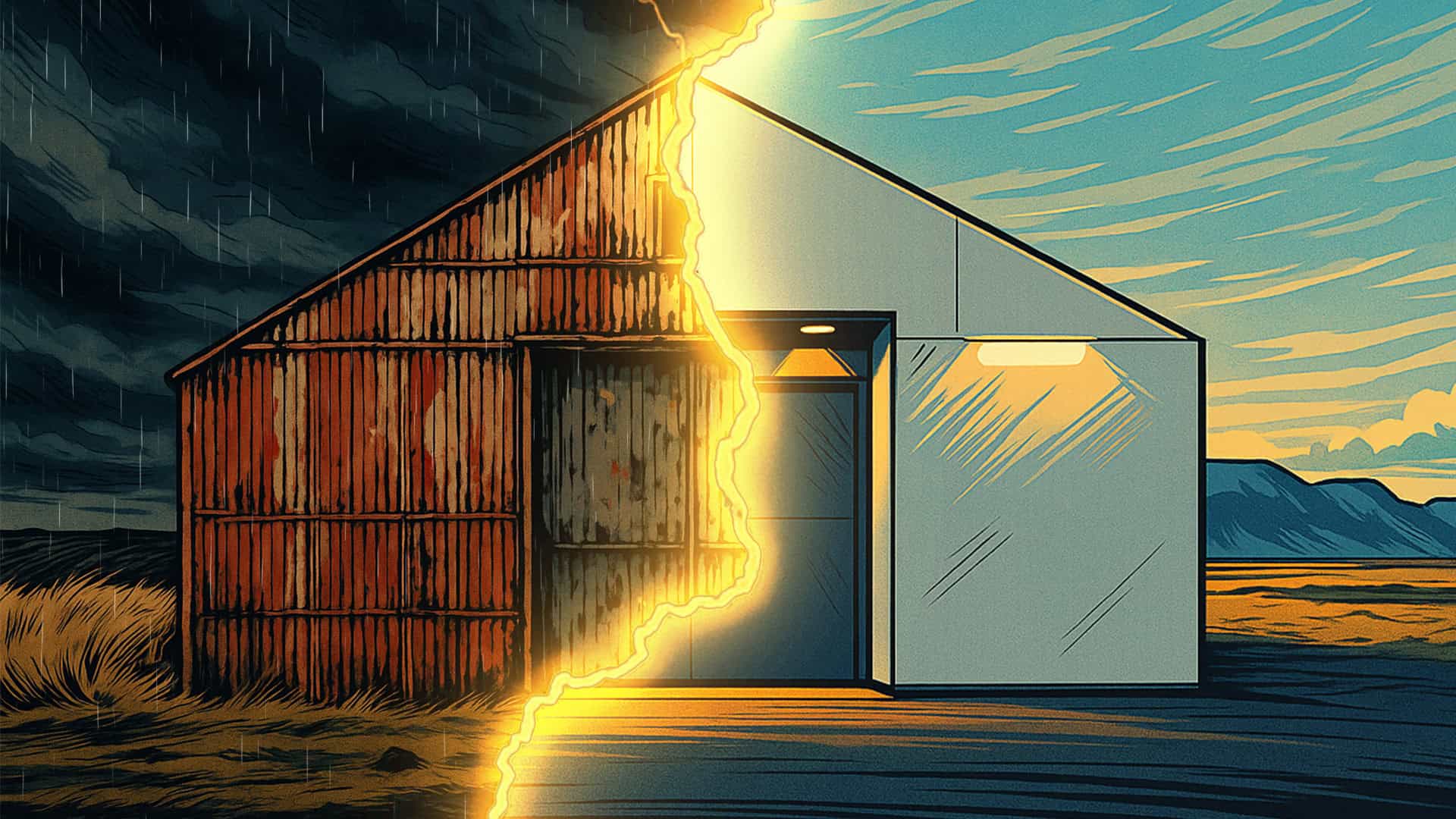
Since the development of crypto mining and generative AI in 2022, an unprecedented demand for computing power has emerged. Tools like OpenAI’s ChatGPT require thousands of graphics processors (GPUs) for their training and operation. These thousands of processors consume a lot of energy — just like the ASICs dedicated to cryptocurrencies.
Beyond this large consumption, mining knows how to make the most of renewable energy. Journal du Coin recently showed this, reporting that its use has doubled since 2011. A real lever for financing renewable energy, Iceland — once the land of mining — is becoming a key witness to the development of HPC (High-Performance Computing) centers dedicated to AI.
Startmining now supports its first clients in their AI investments, in perfect synergy with mining.
Startmining in Iceland: from the land of crypto mining to the land of AI
Thanks to its low energy cost, its renewable energy sources and its cold climate, Iceland has been an attractive hub for Bitcoin mining since 2017. The abundance of geothermal and hydroelectric energy makes the energy-intensive mining process more sustainable and profitable.
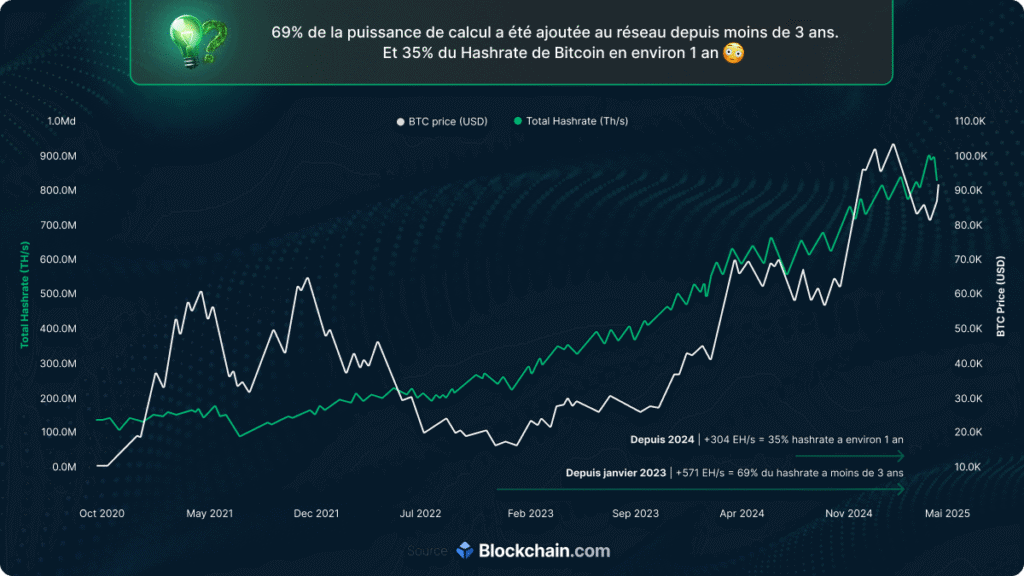
Startmining arrived in Iceland in 2021, when Bitcoin was around $50,000. The network had a total mining power (hashrate) of 150M TH/s (150 EH/s) — in other words, more than 1.5 million S19 ASICs. The mining market was booming, and Startmining had more than 8,000 requests waiting, all boosted by the sector’s general euphoria.
Since we set up in Iceland, the Bitcoin network’s power has multiplied more than fivefold — 70% of that increase happening over the last three years.
Crypto mining funding AI?
Three years of mining: that’s how long it took for Bitcoin to fund the shift to AI. The profits from mining have become a major source of funding for data centers and energy companies in Northern Europe.
Iceland has played a key role in Startmining’s ecosystem. In the early days, our Icelandic mining farms were Tier 1 data centers. The intensive activity of mining (24/7) and the surge in global demand for computing pushed hosts to invest in upgrading their infrastructure. Today, most of our farms in Iceland have become Tier 3 data centers — specialized in high-performance computing (HPC), Tier 3 data centers meet the growing needs of AI.
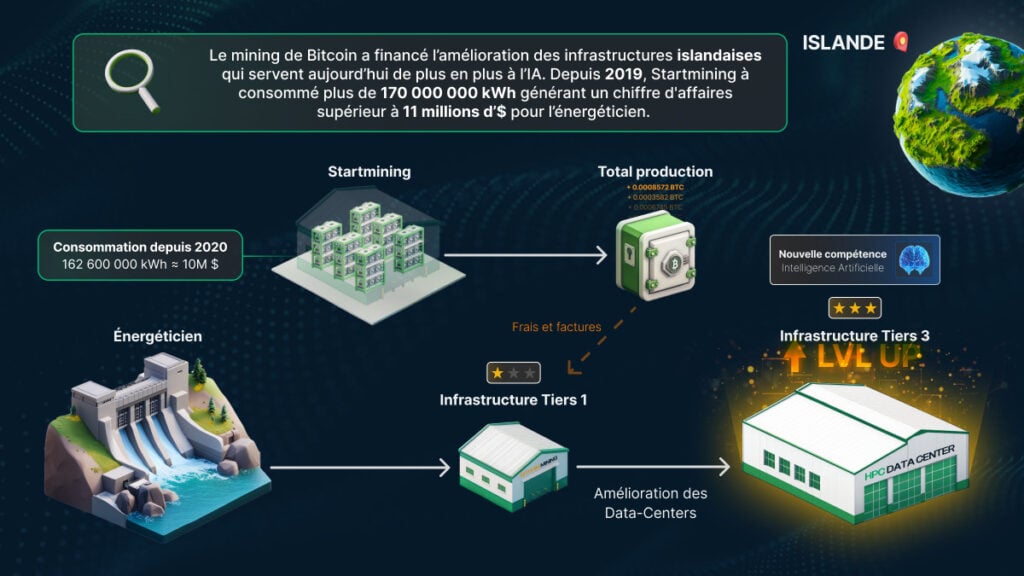
Since late 2024, the Icelandic farms have been evolving to host a growing number of GPUs dedicated to AI. Aware of the exponential demand of this new market, we are exploring Iceland’s future as an AI nerve center.
It was with a mix of nostalgia and excitement that, in December, our team unplugged part of its mines to relocate them — to the United States, Canada, and soon Mexico.
From crypto mining to AI: a new opportunity?
As more and more AI chips replace crypto mining ASICs, crypto miners see a unique opportunity to diversify their revenue and stop depending solely on the crypto market.
Mining companies are turning to cloud computing, giving AI startups more affordable access to cutting-edge GPUs to train their models. For example, the Canadian company Hive Blockchain changed its name to Hive Digital Technologies and announced its strategic pivot to AI. In early 2024, another major crypto player, Tether, revealed an ambitious AI project.
Is AI more profitable than mining?
To assess the profitability of crypto mining versus AI, you just compare the value of one MW of installed capacity. The latest 2024 data shows that the stock-market valuation of Bitcoin mining companies trades on average around $4.5 million per megawatt (MW). By comparison, some AI-focused data-center stocks exceed $20 million per MW.
The challenges of the shift to AI
The transition from mining to AI is a complex process requiring major technical and financial adaptations. It is not simply a matter of unplugging a few ASICs to install AI chip clusters. While these integrate easily into high-end infrastructure, most of Bitcoin’s hashrate comes from Tier 1 data centers, and most mining sites require a colossal investment to switch to AI.
AI: too high a cost?
CoinDesk reported in late 2024 that Core Scientific was developing its AI-focused HPC centers. According to CleanSpark (a BTC miner), a transition to AI will cost between $5 million and $8 million per MW. On top of that, the hardware cost is considerable: replacing 1.5 million mining machines with AI GPUs at $30,000 each would cost more than $50 billion.
Nvidia, the market leader, compares AI-specialized GPUs to rare metals, so strong is the demand. It remains to be seen how long this demand will last and whether current prices are viable over the long term. This situation is strangely reminiscent of the 2021 mining-ASIC frenzy — a topic we covered in our article on Bitcoin ASIC prices: when to buy your miner.
Conclusion
The relationship between crypto mining and AI highlights the crucial importance of computing power. Mining, once a niche market, has become a major financial lever for AI. As AI’s capabilities begin to unfold, mining’s role as a financial catalyst becomes undeniable. This convergence between AI and mining is a strategic opportunity for crypto miners, letting them diversify their revenue sources.
The current profitability of AI chips has attracted massive investment in this technology. In Iceland, mining profits are reinvested in developing the AI sector. This shift marks a new era in which computing power becomes a central engine of global technological innovation.
Startmining supports you with solutions tailored to your needs for acquiring and optimizing your mining installations. To learn more, discover our full offers on our website.
Passez à l'action
Ready to mine Bitcoin with Startmining?
Browse our ASIC shop or simulate your profitability in real time.