The History of Money: From Barter to Bitcoin
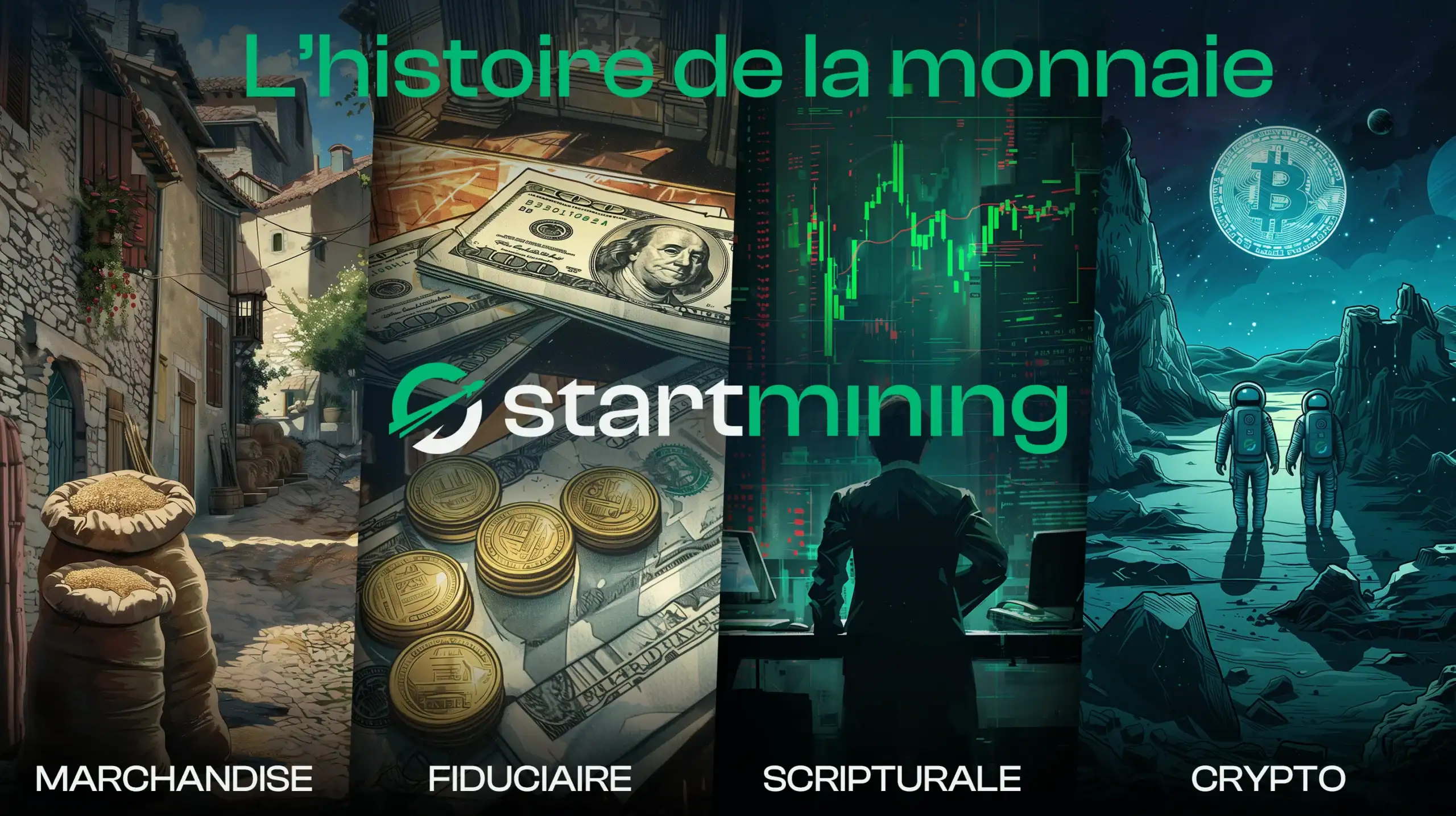
Since antiquity, money has played a crucial role in the development of human societies thanks to its essential functions: a medium of exchange, a unit of account and a store of value. Let’s look at how its form has evolved through history — from barter to Bitcoin, a quick tour of the history of money over time.
Commodity money, or proto-money
In the beginning, barter was the main method of exchange. It was impractical: it required the double coincidence of wants, and it could be hard to arrange when goods were not divisible.
The word “pecuniary” comes from the Latin pecus, meaning livestock.
Over time, units of exchange appeared — shells, barley grain, salt. The word “salary,” in fact, comes from the Latin salarium, meaning salt, a precious foodstuff used to preserve food and to pay the soldiers and officials of the Roman Empire. Later, to make trade easier, precious metals such as bronze, gold and silver were used as money, accepted for their intrinsic value and their scarcity.

Metal coinage (the first historical currencies)
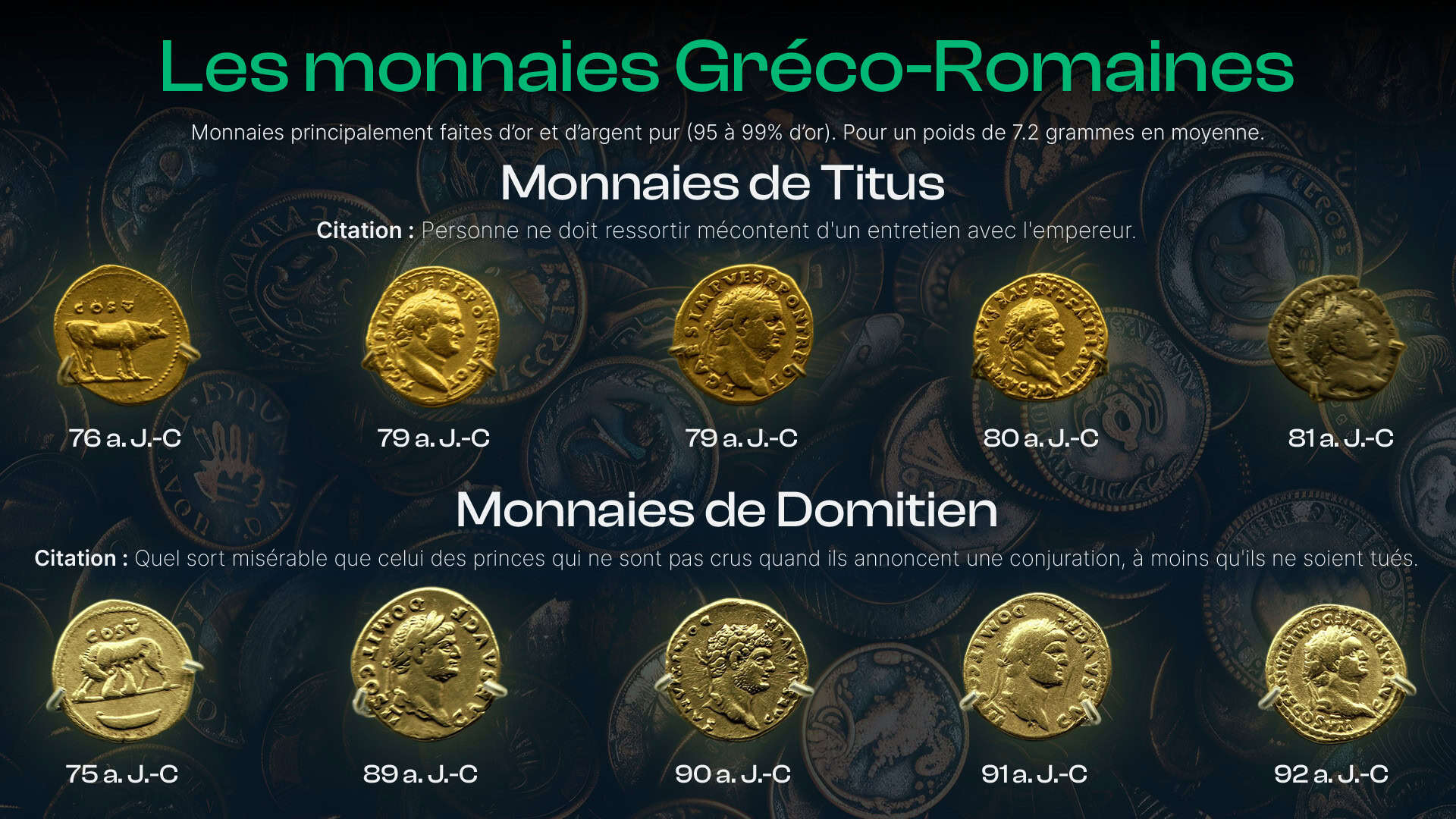
Later, around 650 BC, the first struck coins appeared in Lydia (modern-day Turkey). Made from an alloy of silver and gold called electrum, they had the following characteristics: a fixed weight, identical shapes, and a stamp authenticating their standard. They then gradually appeared in Europe and China.
From then on, the exchange of goods accelerated and reached its peak with the conquests of the great Greek and Roman empires. Each kingdom or empire struck coins bearing the portrait or effigy of its king or emperor.
The role of innovation, energy and scarcity in the history of money
The quantity of the earliest commodity and metal currencies (salt, barley, shells, bronze, etc.) depended on their scarcity in the environment. Their accessibility (production/extraction) was tied to innovation in production methods, which determined the effort and the energy needed to create them.
It is logical to think that the effort a merchant puts into producing value is, in one way or another, correlated with the effort needed to produce money. If the energy required to produce a service or product exceeds the energy needed to produce the money, then continuing the trade loses its point. Innovation and money-production techniques clearly played a role in monetary stability. Throughout history, scarcity has served to define a shared store of value. Humanity has, consciously or not, correlated scarcity with energy — which became the natural rule common to all users of a currency.
The link between the price of Bitcoin and mining is, likewise, largely tied to innovation (mining hardware) and energy (production cost).
Money succeeded because of its durability, its portability, and its intrinsic value. These strengths made it an instrument of political control for rulers: it made tax collection easier, financed armies and developed cross-border trade. Money reflected a nation’s economic and military power.
The history of paper money
It was in China that the first banknotes appeared, in the 11th century, to make up for a shortage of metal, prevent theft and make long distances easier to cover.
In the 14th century, Italian bankers created bills of exchange in Europe — which can be seen as the ancestor of the cheque — to counter the recurring attacks on gold convoys. It was from this point that banks emerged.
Fiat money
In 1685, in Canada, French colonists invented fiat money (from the Latin fiducia, meaning trust). Coins (divisional money) and banknotes (financial money) make up fiat money, whose value is no longer set by its material worth but by the trust users place in its stated value.
Gradually, it replaced money with intrinsic value (metal money, whose value was tied to its extraction and scarcity). A centralizing body, such as a state, guarantees and enforces fiat money. It is issued by the country’s central bank and is both legal tender and forced tender. This means its value is recognized by the state and that it cannot be exchanged for gold.
Fiat money today
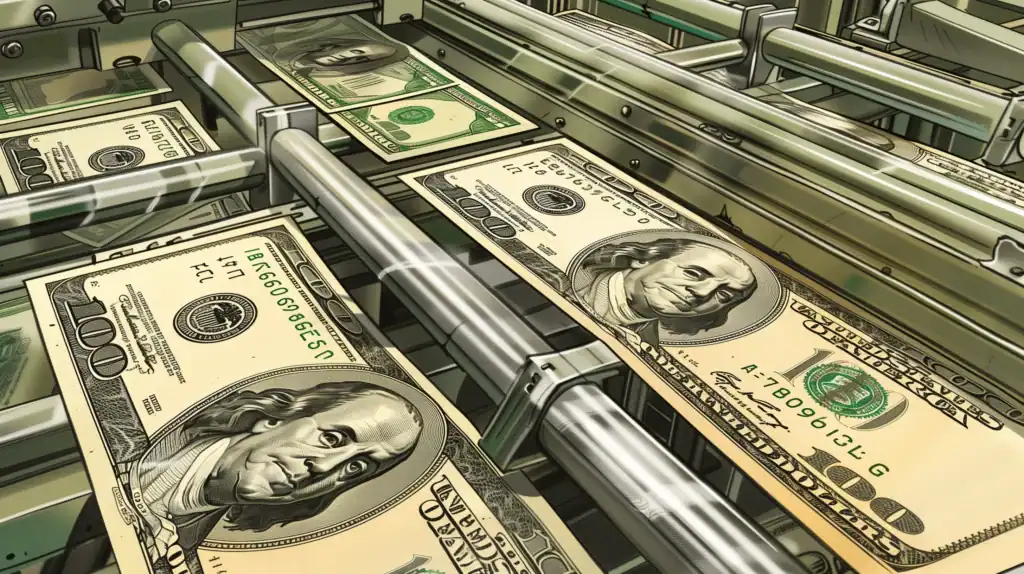
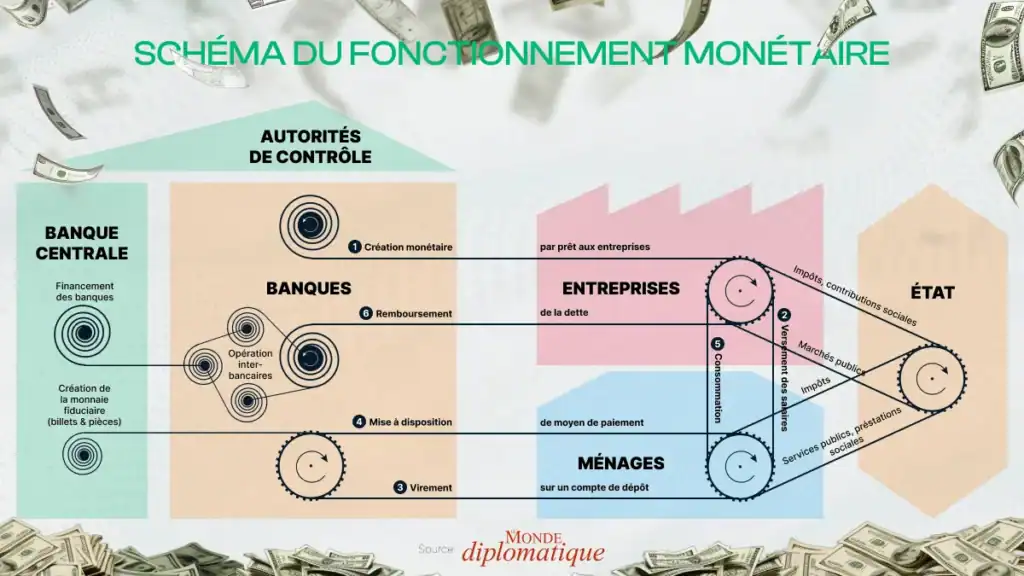
Today, most of the world’s economies use fiat money. In France, the Banque de France, accredited by the European Central Bank, produces and circulates banknotes, while La Monnaie de Paris manages the creation of coins. Fiat money is said to be “discharging”: it allows a debt to be settled through a simple exchange. It is currently estimated to represent 10% of the money in circulation in the eurozone.
Worth noting: an irresponsible monetary policy can lead to inflation, or even the hyperinflation, of a fiat currency. The currency then loses value: its face value stays the same, but its exchange value falls, causing a loss of purchasing power.
The supremacy of the dollar
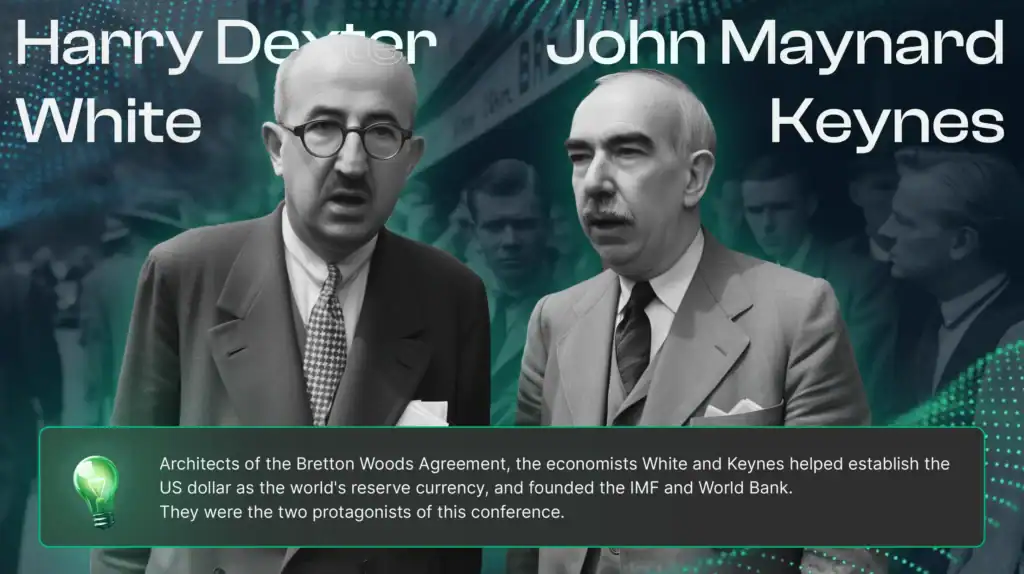
In July 1944, in the aftermath of the Second World War, representatives of 44 countries met at Bretton Woods in the United States to negotiate the future of post-war finance and trade. Out of these negotiations, the US dollar officially became the currency of international transactions, pegged to a fixed rate of convertibility into gold. The agreements gave birth to the International Monetary Fund and the World Bank — two institutions that would grant dollar loans to countries facing economic difficulties after the war, marking a turning point in the history of money.
The end of gold convertibility: a historic event
On August 15, 1971, US President Richard Nixon ended the convertibility of the dollar into gold in response to budget deficits. The deterioration of the US balance of payments, caused by the Vietnam War and the financing of the welfare state, had widened those deficits. Since the 1960s, the dollar reserves accumulated by the main exporters to the United States had been driving worrying inflation.
West Germany accelerated the end of the system by demanding that its dollar surpluses be redeemed in gold. To protect their gold reserves, the United States suspended the dollar’s convertibility into gold on August 15, 1971. It was around this time that US Treasury Secretary John Connally declared: “The dollar is our currency, but it’s your problem.”
Scriptural money
Scriptural money appeared with the creation of bank accounts. It is entirely dematerialized, recorded as an entry on an account line. It is created by commercial banks but can be converted into fiat money.
At the end of 2023, scriptural money represented more than 90% of the money in circulation in the eurozone. Online payments and the rise of digital banks are fueling its growth. Scriptural payment methods include the cheque, bank transfer, direct debit and the payment card.
Worth noting: the payment card, the cheque and the bank transfer should not be confused with money itself. They are instruments that carry money and act as its vehicle. Destroying them does not destroy the money.
Cryptocurrencies: a new chapter in the history of money
Also called virtual currencies or crypto-assets, cryptocurrencies are electronic currencies built on blockchain technology.
Bitcoin, the best known of them, was launched in 2009 by a certain Satoshi Nakamoto. It is the first decentralized peer-to-peer electronic monetary network. Unlike fiat currencies, which rely on centralized trust, Bitcoin relies on a protocol that does away with trusted intermediaries through Proof of Work — a process that secures transactions in a fully decentralized way, run by its community of participants (the miners).
Since then, many cryptocurrencies (altcoins) have appeared, including Ethereum (ETH), Ripple (XRP), Litecoin (LTC) and Kaspa (KAS). There are also crypto-assets backed by fiat currencies or by gold.
Stablecoins: the answer to crypto market volatility
Stablecoins were created to solve the main problem of cryptocurrencies: volatility. Their value is meant to track the asset they represent. In 2014, Tether created the first stablecoin backed by the US dollar: USDT, a centralized stablecoin. There are also decentralized stablecoins pegged to other cryptocurrencies, and algorithmic stablecoins that use a consensus mechanism acting as a kind of central bank to maintain price stability. Today, stablecoins account for 5% of the crypto market and exceeded $150 billion in capitalization in early 2024.
Many central banks have stablecoin projects backed by their own currency — Central Bank Digital Currencies (CBDCs). Will they write a new chapter in the history of money?

And what about “fiat” money? The term refers to money issued and regulated by a central bank under state control. It is widely used in the crypto world.
What next? The history of money will keep being written
Money will keep existing, and the forms it takes will evolve with the needs of populations. New payment methods will emerge (fingerprints, voice recognition, and so on). As for Bitcoin, it is far from done making headlines.
Want to learn more about Bitcoin, its history and how it works? Read our article on the Bitcoin revolution.
Want to take part in the consensus through mining? Startmining has operated in mining since 2017 and supports you in your investment journey. Find our expertise on our website and explore our products and services.
Passez à l'action
Ready to mine Bitcoin with Startmining?
Browse our ASIC shop or simulate your profitability in real time.