The Bitcoin Revolution
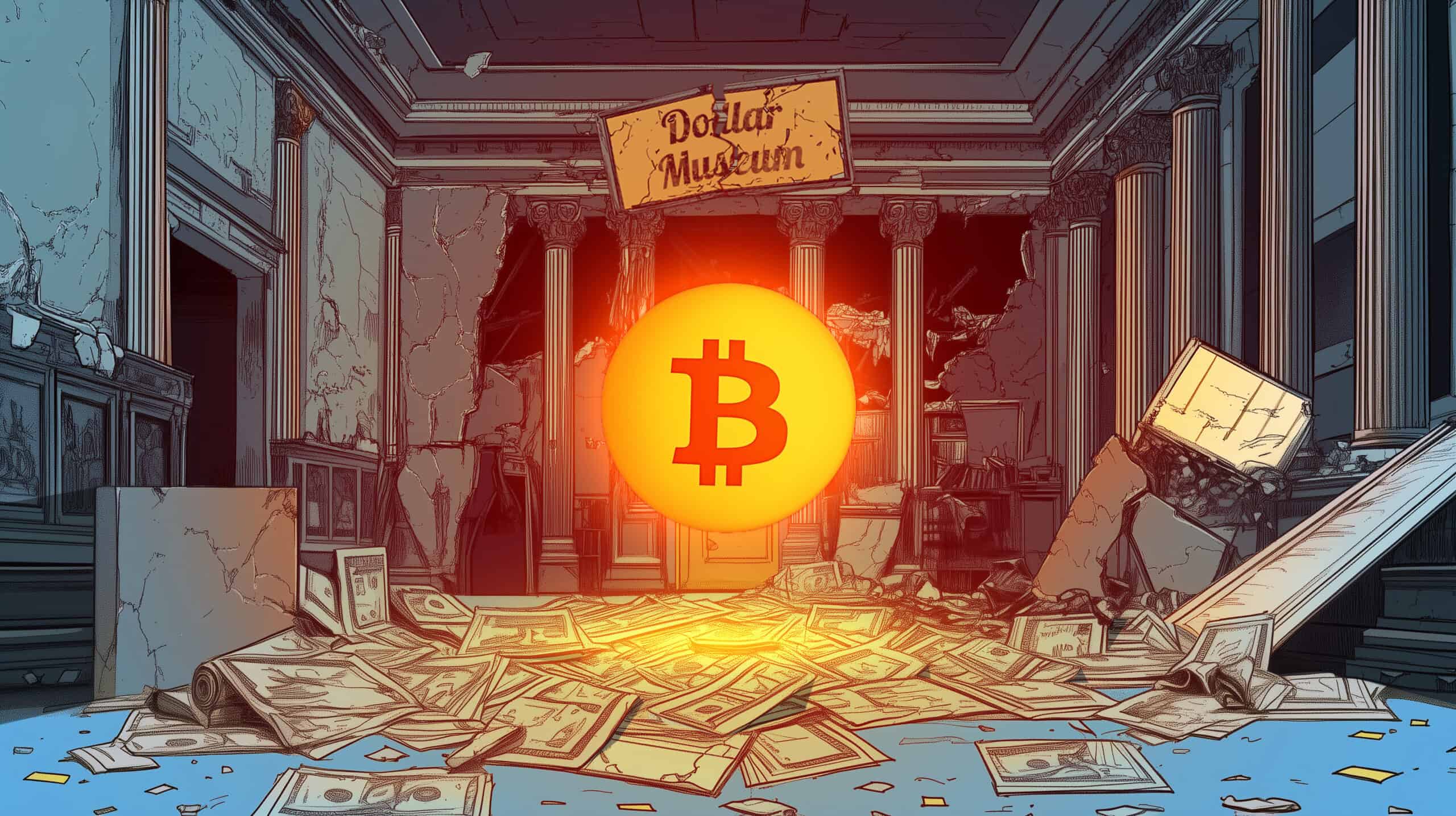
Bitcoin is the subject of much controversy. A divisive topic — sometimes criticized for being energy-hungry, sometimes praised for its decentralized form — Bitcoin remains misunderstood by most people and suffers from a bad reputation among many state authorities and financial institutions. Let’s take stock of this virtual currency. In this article, we look at what Bitcoin really is, its story in broad strokes, and who is behind the pseudonym Satoshi Nakamoto.
Bitcoin, the first decentralized digital currency
First of all, Bitcoin is a digital asset that uses cryptography in its creation and management. It is also a store of value. But beyond that, Bitcoin has a political dimension, in that it aims to revolutionize the financial world as we know it. Satoshi Nakamoto created Bitcoin to bypass the traditional financial system by setting up a decentralized ledger (the blockchain) that allows peer-to-peer online transactions — that is, without using a trusted third party (a bank). All the data generated is public and verifiable by participants. We can therefore speak of a true revolution in the world of monetary transactions.
Once upon a time, Bitcoin…
It all began in 2008. In the midst of the subprime crisis, Bitcoin was born. Its creator, known by the pseudonym Satoshi Nakamoto, sent a link to the Bitcoin white paper to a mailing list called the “cryptography mailing list.”
Here are the main features of Bitcoin as described in Satoshi Nakamoto’s white paper:
- No trusted third party (financial institutions)
- Participants can be anonymous
- Creating money requires Proof of Work (a kind of seal proving that the block was duly verified and added to the blockchain, guaranteeing its integrity)
- Double spending is prevented thanks to the peer-to-peer network and Proof of Work
- A reward system is set up for miners — made up of both new bitcoins and transaction fees — to guarantee the network’s integrity
- The money supply is capped to avoid the risk of inflation: 21 million bitcoins
The birth of Bitcoin
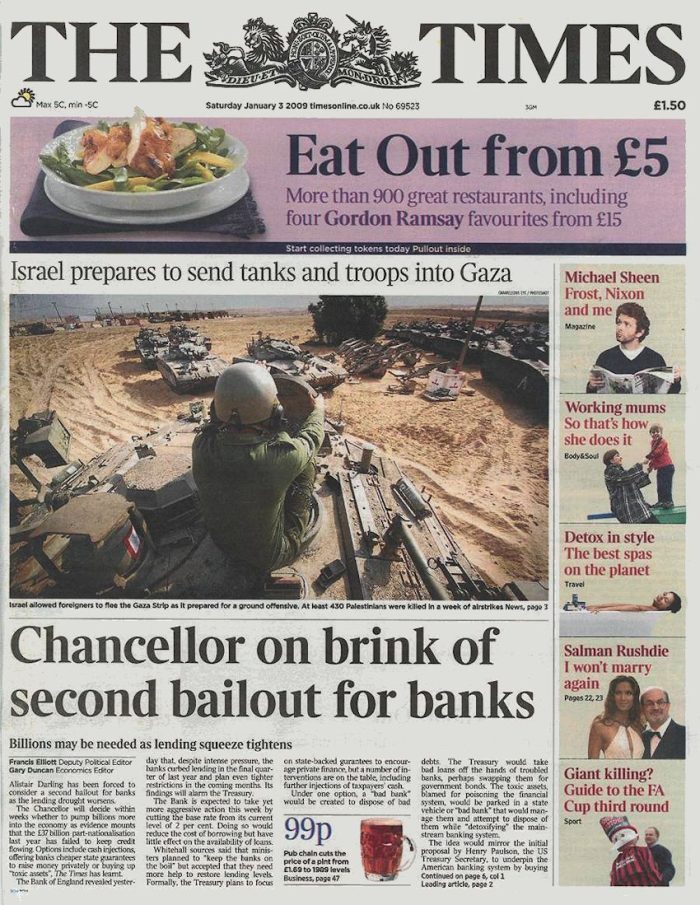
In concrete terms, the first block of the Bitcoin blockchain, the “genesis block,” was validated on January 3, 2009. In that block you can read the Financial Times headline of that day: “Chancellor on brink of second bailout for banks.” This sentence, inscribed by Satoshi Nakamoto in the genesis block, serves as a timestamp — and it was not chosen at random. It reflects his distrust of the traditional financial sector.
At first, only a small number of miners — members of the cypherpunk movement — took part in mining bitcoins. They used powerful computers to solve complex mathematical problems, thereby issuing new bitcoins and verifying that previous transactions were legitimate and valid. Then they exchanged bitcoins just for fun.
The first transaction to pay for goods took place on May 22, 2010, in Florida: the purchase of two pizzas for 10,000 BTC. This transaction had the merit of establishing, for the first time in the real world, the value of bitcoin at $0.04. Since then, this first transaction is celebrated each year on that date as “Bitcoin Pizza Day.”

From 2009 to 2012
Between 2009 and 2012, 11.5 million BTC were mined. It was only from 2010 that mining became a profitable activity.
In 2010, the first exchanges appeared, enabling wider Bitcoin adoption. That same year, miners began using GPUs (graphics processors) to mine.
In February 2011, bitcoin reached parity with the dollar.
In spring 2011, Satoshi Nakamoto dropped off the radar.
In June 2011, miners began using FPGAs to mine.
On September 27, 2012, the Bitcoin Foundation was created to standardize, protect and promote Bitcoin.
In November 2012, the first halving took place — the halving of rewards, which dropped from 50 to 25 BTC per block. The halving occurs every time 210,000 blocks are mined and added to the blockchain.
The rise from 2013 to 2021
It was only from 2013 that Bitcoin began to attract attention — notably because it passed $1,000 and crossed the 100,000-transactions-in-a-day mark on November 28, 2013. It was now accepted as a means of payment by some merchants and as a financial product by some investment funds.
In 2013, the first ASICs appeared (Avalon ASIC) — machines designed specifically for Bitcoin mining, with great computing power and ever-improving performance. This is when the industrialization of Bitcoin mining began.
On May 21, 2014, Bitcoin entered the Larousse and Le Petit Robert dictionaries.
In 2015, the Lightning Network white paper was published — a second layer of the Bitcoin protocol aimed at improving scalability, transaction speed and cost.
In November 2017, the queen of cryptocurrencies crossed the $10,000 mark.
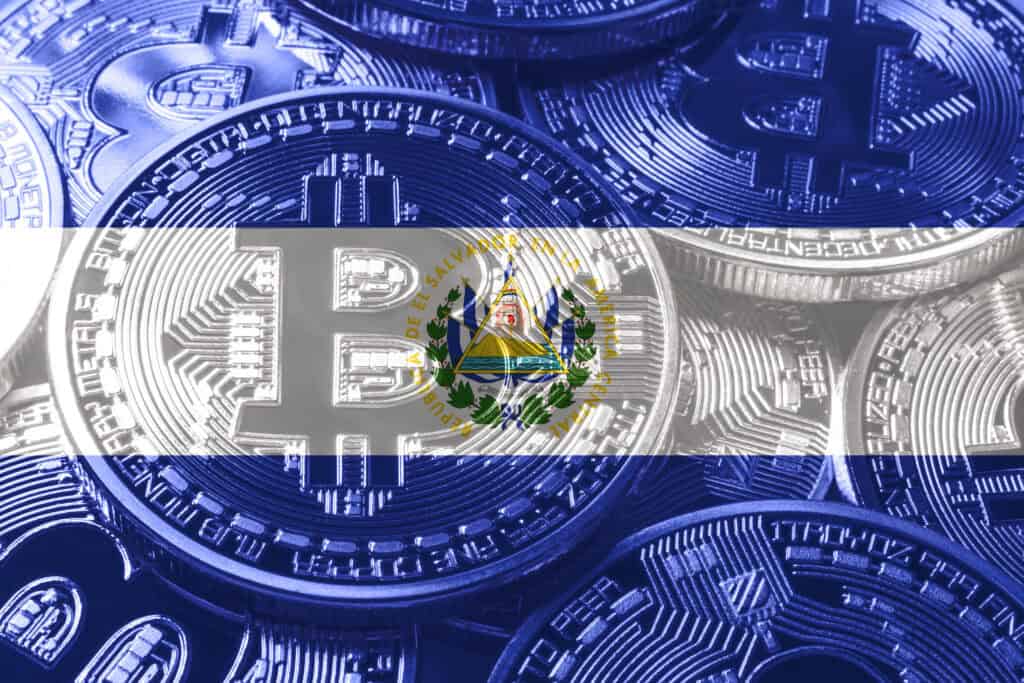
On September 7, 2021, El Salvador became the first country in the world to adopt Bitcoin as legal tender.
From 2022 to 2025: Bitcoin’s institutionalization and the return of the bull market
2022: challenges and volatility. 2022 was marked by heightened crypto-market volatility. In May and June, Bitcoin’s price fell sharply, notably because of the collapse of TerraUSD, a stablecoin, and the bankruptcy of Celsius Network, a crypto lending company. On June 18, Bitcoin fell below $18,000, reaching levels lower than in 2017.
2023: innovation and renewed interest. In 2023, the Bitcoin network saw the introduction of “ordinals,” non-fungible tokens (NFTs) on its blockchain, broadening its use cases. In January 2023, Bitcoin passed $23,000, regaining levels not seen since August 2022.
2024: institutional adoption and new highs. 2024 was marked by increased institutional adoption. In January, the first spot Bitcoin ETFs launched in the United States, giving investors direct exposure to Bitcoin on US stock markets. In December, Bitcoin’s price crossed $100,000 for the first time, spurred by statements from President-elect Donald Trump, who promised to make the United States the “crypto capital of the world” and to accumulate Bitcoin reserves. That same year, BlackRock, the world’s largest asset manager, recommended that investors allocate up to 2% of their portfolio to Bitcoin.
2025: current trends. As of January 20, 2025, Bitcoin continues to show positive momentum. On the day of President Donald Trump’s inauguration, Bitcoin hit a new record, passing $109,000. This rise is attributed to the president’s stated support for cryptocurrencies and the anticipation of sector-friendly policies.
The mysterious Satoshi Nakamoto
Many have tried to uncover the real identity of Satoshi Nakamoto and to solve the mystery surrounding Bitcoin’s creator, without succeeding. In reality, it could be one or several people. Is it a man or a woman, a collective, Hal Finney, or even Elon Musk? Every theory, even the wildest, has been raised. Yet it is clear that Satoshi Nakamoto’s anonymity is part of the project, because it serves decentralization and the protection of privacy. Bitcoin belongs to no one — and therefore to everyone. The Proof of Work consensus lets anyone become an actor in the network and actively take part in creating value. Therein lies Bitcoin’s strength.
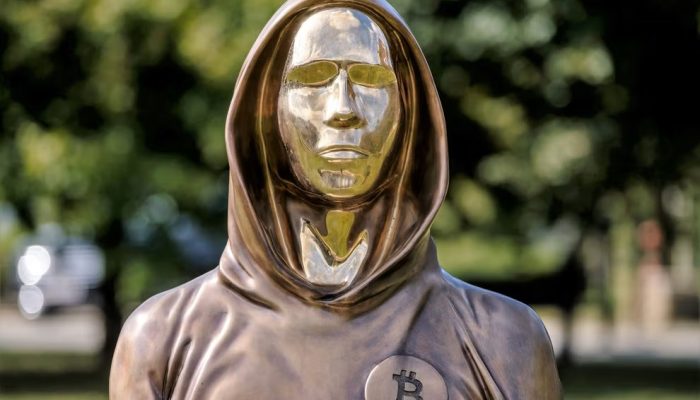
It is estimated that Satoshi Nakamoto mined close to 1 million bitcoins between 2009 and 2010 — and never moved them from his wallets, which makes him the biggest Bitcoin whale (the term for holders of more than 1,000 BTC). Dive into the fascinating discovery of the Patoshi miner in our article on the Patoshi miner.
We’re sorry to disappoint you, but today is not the day you’ll learn Satoshi Nakamoto’s identity. And that’s a good thing — it’s how the legend lives on. To go further, see our article on who is Satoshi Nakamoto.
What will become of the queen of cryptocurrencies?
It is impossible to predict where Bitcoin will go. Only the future will tell. What is certain, however, is that Bitcoin is far from done surprising us. At once a protocol, a network, a means of payment and exchange, a financial asset and a store of value, Bitcoin is revolutionizing our current monetary system — itself battered by yet another economic crisis. And whether we like it or not, one thing is sure: the Bitcoin revolution is underway, despite the storm it is currently weathering. Vires in numeris.
Fascinated by this topic and want to know more? We invite you to watch the excellent documentary web series “Le mystère Satoshi,” directed by Rémi Forte for Arte and released in November 2021.
And for those who would like to learn more about Bitcoin mining and how it works, head over here: Bitcoin mining explained. If you’re wondering about the trade-offs between mining or directly buying bitcoins, read our detailed analysis: Buying vs. Mining Bitcoin. And if you’re unsure about the meaning of a term used here, check our glossary to learn the vocabulary of the cryptosphere.
Passez à l'action
Ready to mine Bitcoin with Startmining?
Browse our ASIC shop or simulate your profitability in real time.