Bitcoin Supply: How Are the 21 Million Distributed?

Bitcoin, the first and most famous cryptocurrency, is built on a central principle: digital scarcity. Unlike traditional currencies, which central banks can print at will, the Bitcoin protocol is designed to issue only a limited number of coins — namely 21 million. This is what we call Bitcoin’s supply. This absolute cap makes the distribution of these bitcoins a crucial topic for understanding the state of the Bitcoin ecosystem.
Note: this article reflects the state of the network in October 2024.
Still finding the world of crypto and mining a little blurry? See how we got here in our article on the history of money, from barter to Bitcoin.
The distribution of Bitcoin’s supply: a key indicator
The distribution of Bitcoin’s supply refers to how the available coins are held and spread among the ecosystem’s different players: individuals, companies, institutions, miners, whales, exchanges and even states. Each group plays a different role in the market and can behave differently when it comes to accumulating or selling bitcoins.
Why does Bitcoin’s supply distribution matter?
How bitcoins are distributed can have significant impacts on several aspects of the market and network security. For example:
- Decentralization: a fair distribution of the supply among many players can strengthen the network’s decentralization. Conversely, excessive concentration raises concerns about price manipulation and the centralization of economic power in the ecosystem.
- Liquidity and volatility: whales (entities holding large amounts of bitcoin) can have an outsized influence on market moves. A sudden move of their holdings can trigger waves of volatility, affecting investors of all sizes.
- Adoption: how the supply is distributed can be a good indicator of Bitcoin’s overall adoption. A rise in the number of small addresses could reflect growing adoption by individuals, while more wallets held by companies is also a sign of Bitcoin’s democratization.
Bitcoin’s supply distribution in 2024
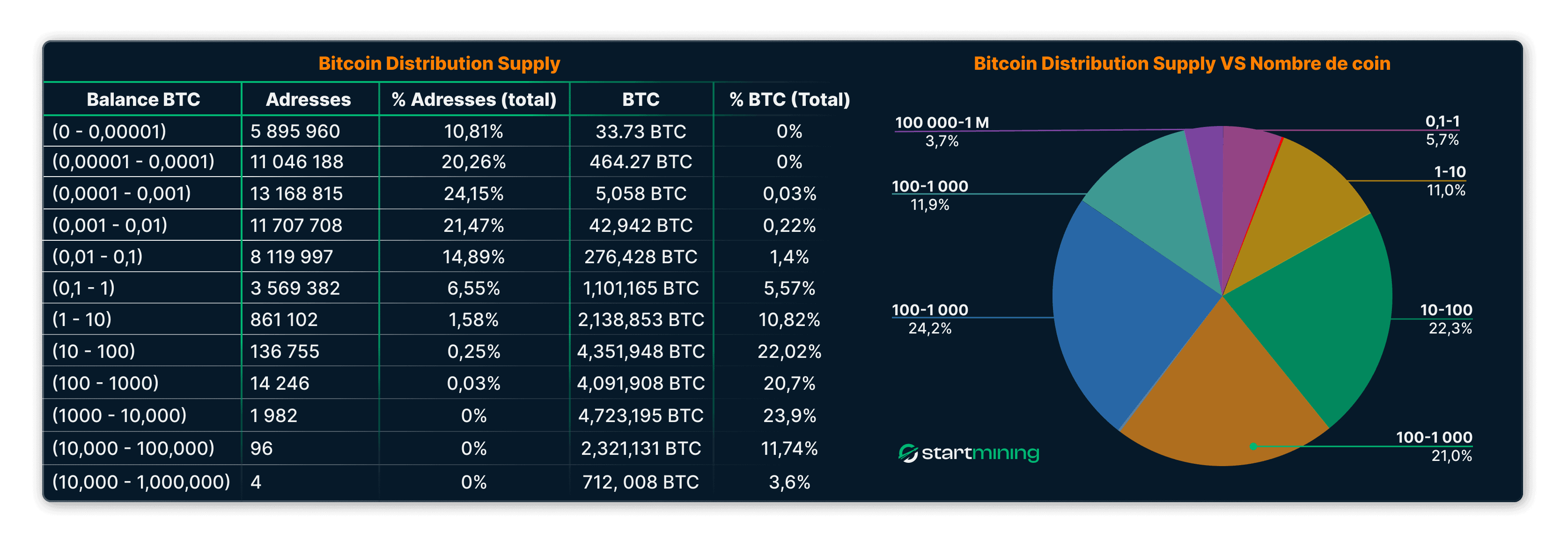
On-chain analysis lets us see how Bitcoin’s supply is distributed by each address’s balance. We find that around 153,093 addresses holding more than 10 BTC own more than 80% of the total supply. That represents a small fraction of the 460 million existing addresses, illustrating the strong concentration of bitcoins in the hands of a limited number of holders — known in the ecosystem as “whales.” This concentration plays a key role in market dynamics, influencing Bitcoin’s liquidity and volatility.
Active and inactive whales
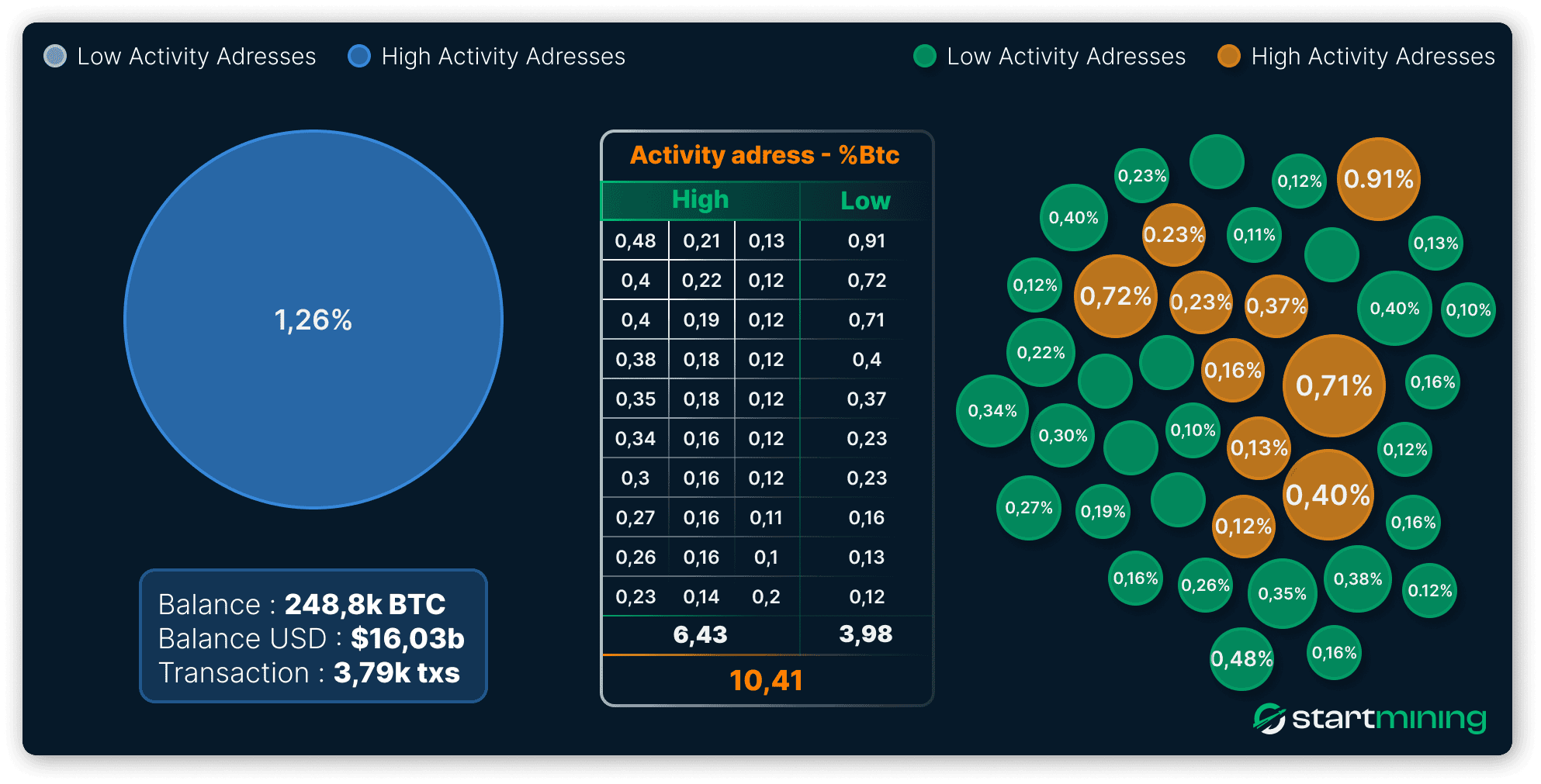
Whales fall into two types: the very active, who move their bitcoins regularly, and the inactive, who hold them for a long time without transacting. The very active ones often influence market volatility through large moves. According to on-chain analysis, 32 of the largest addresses alone hold around 11% of the total supply. This shows that even though Bitcoin aims for decentralization, a small number of addresses can weigh on the market through their actions.
Crypto exchanges
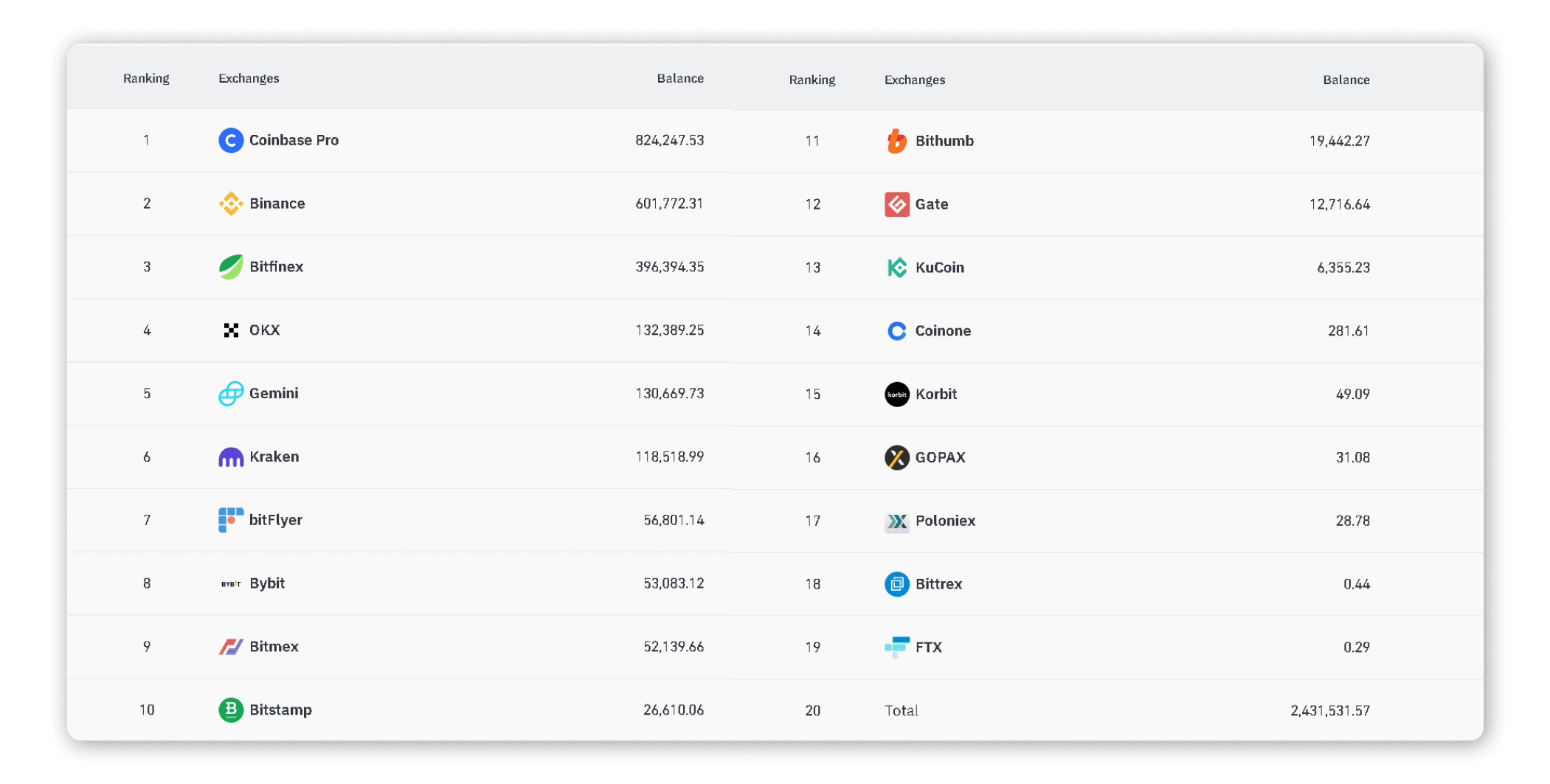
Crypto exchanges are key players in the ecosystem, facilitating the buying, selling and trading of BTC. They also hold large amounts of Bitcoin in cold wallets for their users. These platforms are essential to market liquidity and the security of funds. According to CoinGecko, the 20 largest exchanges alone hold around 2,413,531 BTC. This shows how much of the supply these platforms concentrate, directly influencing market liquidity and the overall security of assets in circulation. That said, the bitcoins held by exchanges belong to millions of customers around the world.
Public companies that hold Bitcoin
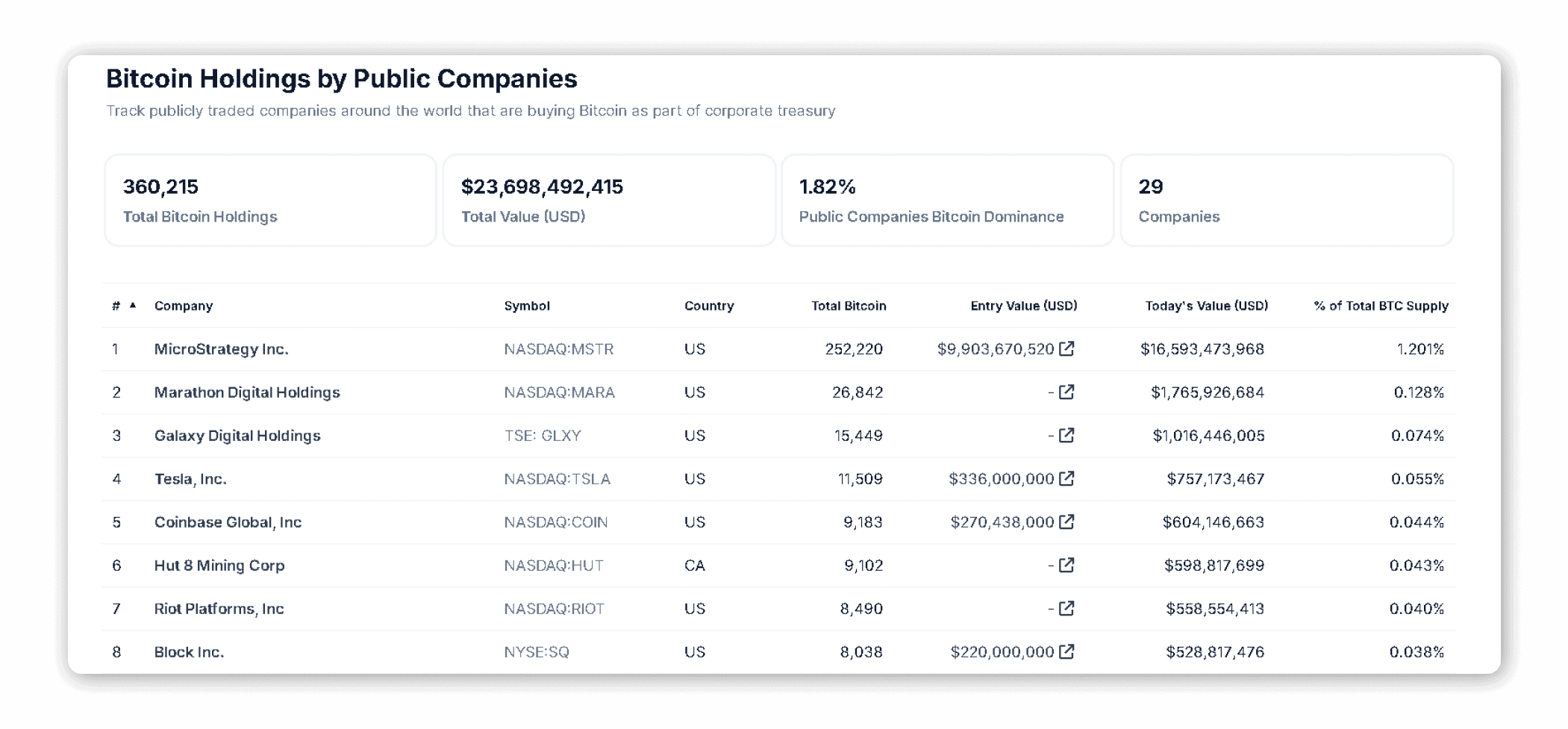
More and more companies are adding Bitcoin to their treasury as a store of value or a hedge against inflation. This trend marks growing corporate adoption of Bitcoin, with companies using the asset to diversify their reserves. Companies like MicroStrategy, Tesla and Square paved the way, drawing the attention of other institutional players.
Currently, the 29 largest public companies holding Bitcoin own around 360,215 BTC, or 1.82% of the total supply. This shows how institutional adoption has become an important factor in bitcoin distribution. These companies see Bitcoin as a long-term strategic opportunity, which helps strengthen the asset’s legitimacy in traditional financial markets.
States that hold Bitcoin
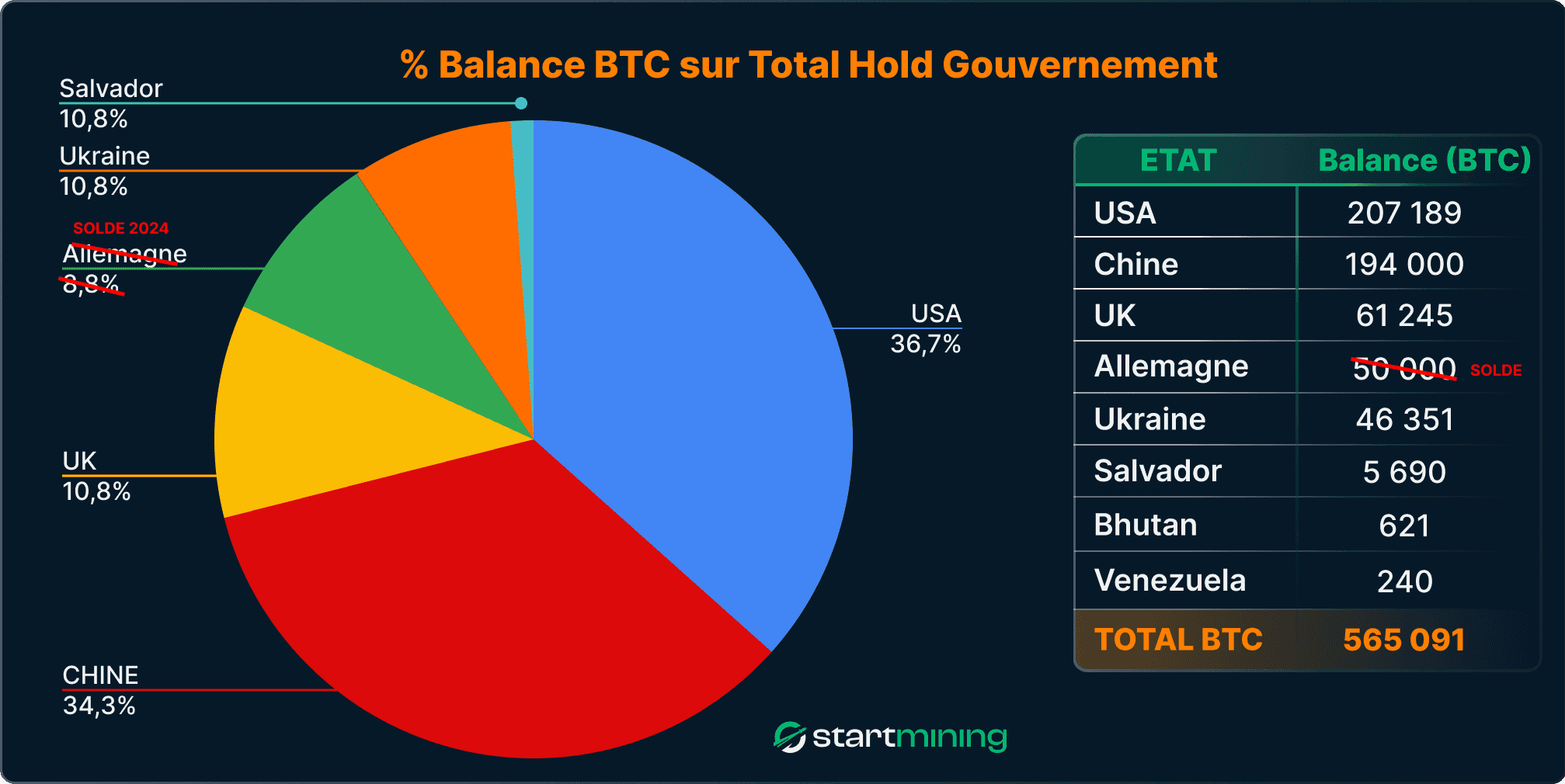
States hold around 569,070 BTC, or about 2.69% of Bitcoin’s total supply. The main holders include:
- United States: ~215,000 BTC, mainly from legal seizures.
- China: ~190,000 BTC, mainly seized in the PlusToken case.
- United Kingdom: ~61,000 BTC.
- Germany: ~50,000 BTC.
- Ukraine: ~46,351 BTC.
- El Salvador: 5,690 BTC, acquired after adopting Bitcoin as legal tender.
Miners and their Bitcoin holdings
Here is a list of the five largest miners by BTC held:
- Marathon Digital Holdings: 13,726 BTC
- Hut 8 Mining Corp: 9,366 BTC
- Riot Platforms, Inc.: 7,309 BTC
- CleanSpark Inc.: 2,240 BTC
- Hive Digital Technologies: 2,032 BTC
These figures concern public companies that regularly publish their financial reports. These firms play a key role in mining and accumulating bitcoins, increasing or decreasing their stock according to their operational needs.
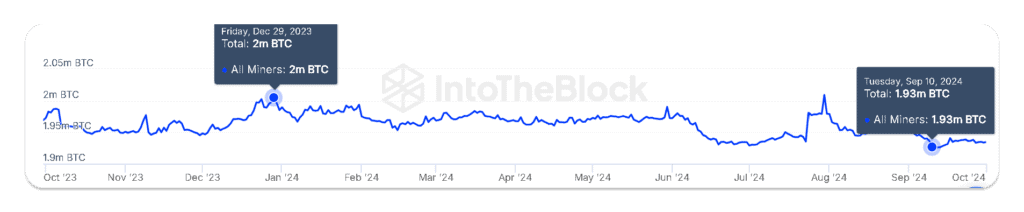
Miners as a whole hold a stock that varies between 1.9 and 2 million bitcoins. Since June 2024, miners have tended to sell their Bitcoin stock — coinciding with the release of new ASIC models and the growth of the network’s power. Is it better to buy or mine Bitcoin? See our article on buying vs. mining Bitcoin.
Conclusion
The distribution of Bitcoin’s supply reveals an ecosystem that is both concentrated and diverse. Whales and exchanges hold a large share of bitcoins, influencing market liquidity and volatility. At the same time, companies are strengthening their adoption of Bitcoin by adding it to their reserves, helping legitimize the asset. Some states like El Salvador follow these forward-thinking companies and hold part of their national treasury in bitcoin. Others, like the US and China, ended up holders following legal seizures and have not yet made an official decision.
However, although Bitcoin aims for decentralization, the strong concentration of its supply shows that issues of control and power remain present, shaping the dynamics of the global market.
Passez à l'action
Ready to mine Bitcoin with Startmining?
Browse our ASIC shop or simulate your profitability in real time.