From CPU to ASIC: The Evolution of Bitcoin Mining
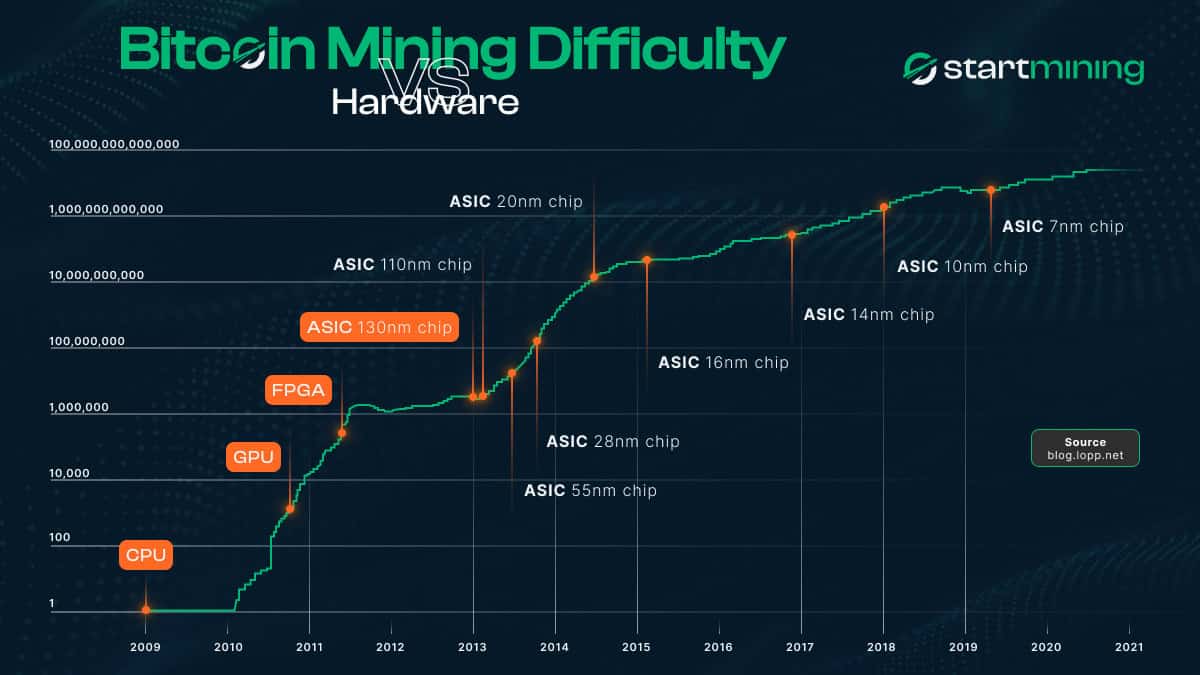
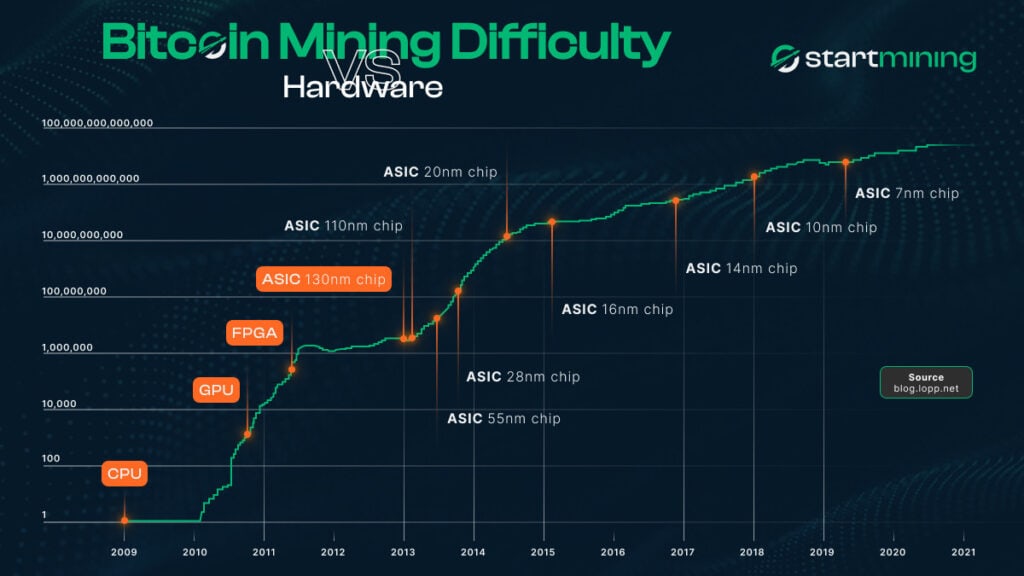
Bitcoin mining has never stopped evolving since the network’s creation in 2009. From an ordinary computer to a machine purpose-built for the job, mining hardware has come a long way — driven by constant improvements in technology.
To understand the history of Proof of Work, you first have to understand the evolution of computing power.
Still finding the world of crypto and mining a little blurry? See how we got here in our article on the history of money, from barter to Bitcoin. And if you are wondering whether it is better to mine other proof-of-work coins than Bitcoin, this guide is for you.
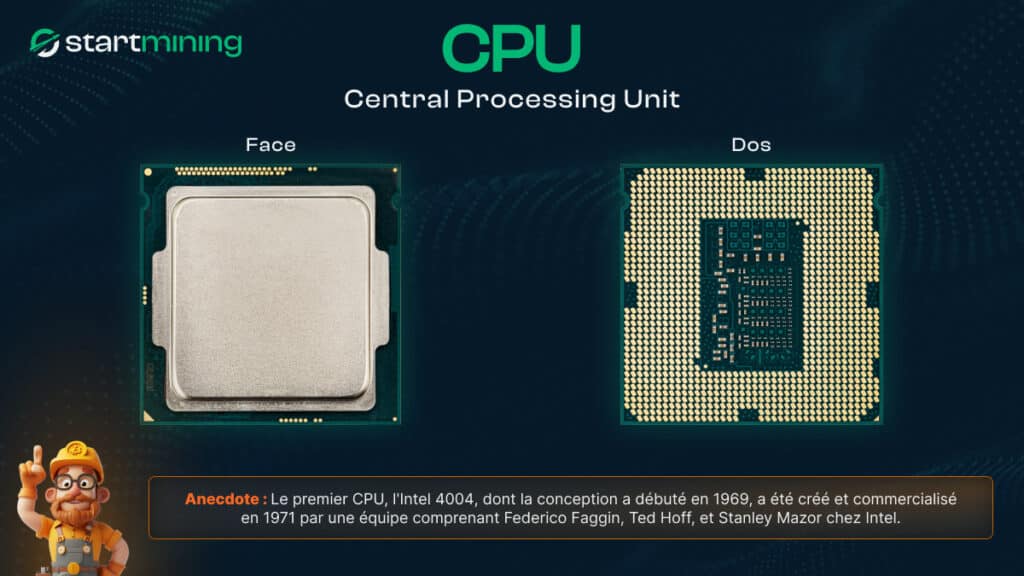
CPUs: the earliest days of Bitcoin mining
At first, miners used their own computers to mine. But that did not last. As the network’s total power (hashrate) grew, CPUs were no longer powerful enough to mine Bitcoin profitably. Mining is profitable when network rewards exceed costs.
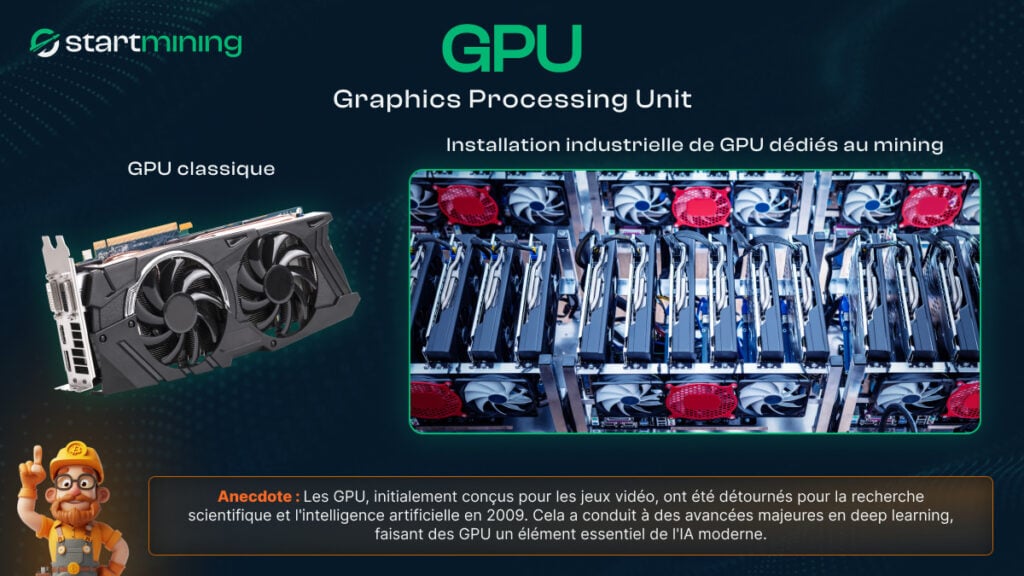
GPUs: the start of mining innovation
GPUs are much faster than CPUs. Graphics cards are powerful processors that handle complex calculations. As mining became more widespread and the price of Bitcoin rose, some people began to imagine the potential of large-scale mining power.
In October 2010, open-source GPU mining software for Bitcoin was released, optimized and adapted for wider use. Before that, in July 2010, a miner named ARTfarm invested in professional hardware (six ATI Radeon HD 5770s), with the ambition of growing to control around 30% of the network. By the end of 2010, ARTfarm was close to that goal, holding between 20% and 30% of the network. He then stopped expanding his mining operation to focus on coding — and was quickly challenged by new GPU miners (the software had become open source). GPU rigs spread, and six months later (July 2011) ARTfarm held just 1% of the network! That story shows just how fast Bitcoin mining was evolving.
Remember those six ATI Radeon HD 5770s? In July 2010 they held 4% of the network at a hashrate of 450 MH/s, earning 1,700 Bitcoins in six days for a power draw of 2.07 kWh. But another way of holding mining power was about to appear and reshuffle the deck for Bitcoin’s early miners. Discover the early days of GPU mining in this Journal du Coin article: premiers mineurs Bitcoin.
FPGAs: the prelude to mining ASICs
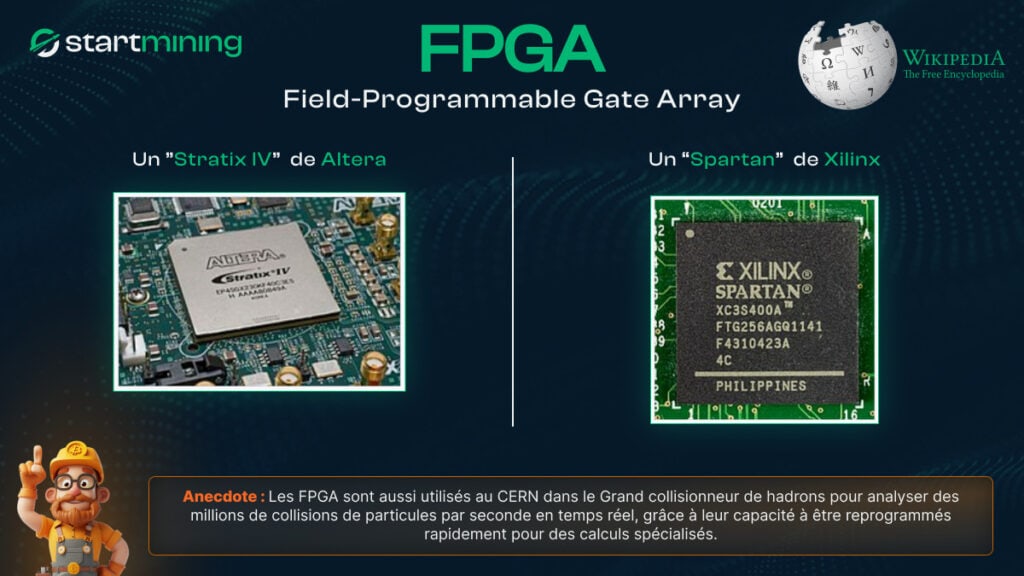
Introduced in 2011, FPGAs* are integrated circuits that can be configured to perform a specific task. They have a higher hash rate than CPUs and some GPUs. FPGAs also offer greater mining flexibility: they can be reconfigured to adapt to changing market conditions (network difficulty levels) and to mine other cryptocurrencies. FPGAs were developed for Bitcoin mining shortly after GPUs.
* Field-Programmable Gate Arrays
ASICs: the industrialization of mining begins
Just as GPUs sealed the fate of CPUs, the arrival of a new technology — “ASIC” — sealed the fate of GPUs and FPGAs for Bitcoin mining. This technology put the cost of energy front and center. Today, an ASIC consumes on average 3,300 kWh for a power of 200 TH/s. For context, the Bitcoin network reached that level of power just three years after its launch, in June 2013!
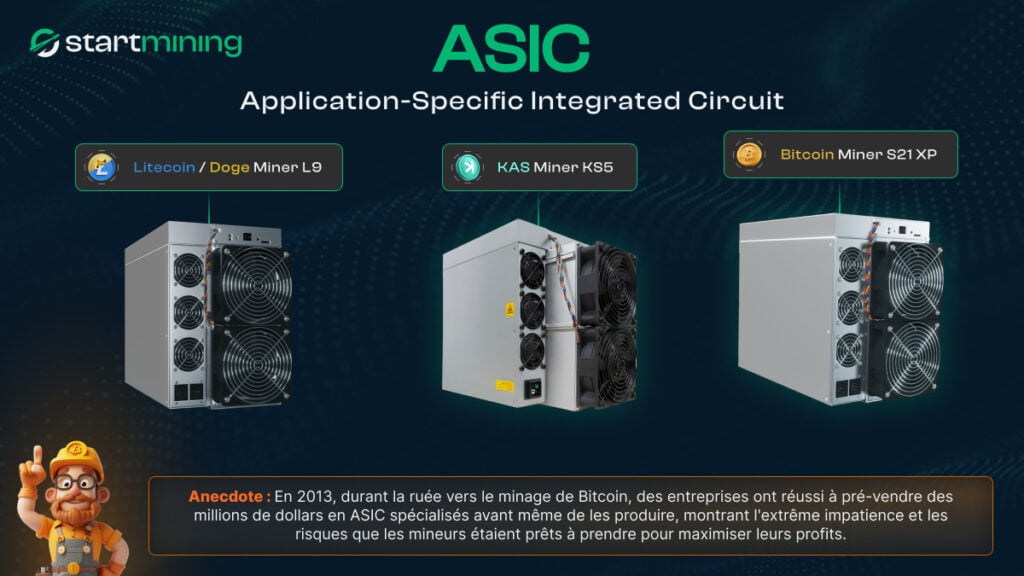
ASICs** are machines designed to perform a single task, such as mining one algorithm. For Bitcoin, that algorithm is SHA-256, for which ASICs deliver optimized computing power. ASIC technology has evolved extremely fast. New, more powerful models — packing the latest innovations on the market (ever-smaller chips) — kept appearing. This rendered older miner models obsolete and kicked off the race for hashrate. That is why it is essential to stay informed about the latest technological advances to remain in the race.
** Application-Specific Integrated Circuit
The evolution of ASICs and Moore’s law
Moore’s laws are empirical observations about the evolution of computing power and the complexity of computer hardware. The first, formulated by Dr. Gordon E. Moore in 1965, predicted that the complexity of semiconductors would double every year at constant cost. Ten years later, Moore adjusted his prediction: “the number of transistors on a microprocessor chip will double every two years.” This second postulate proved remarkably accurate and popularized the term “Moore’s law.”
The evolution of Bitmain’s ASICs:
A mining ASIC in 2020 was 17 times more profitable and 100 times more powerful than the 2014 series.
A 2024 ASIC is 30% more efficient than a 2022 model, which was itself 30% more efficient than a 2020 one! This is thanks to advances in chip etching (measured in nanometers) and heat management. On that note — is it better to start your mining journey with a new or a used ASIC? Find the answer in our guide on new vs. used Bitcoin ASIC miners.
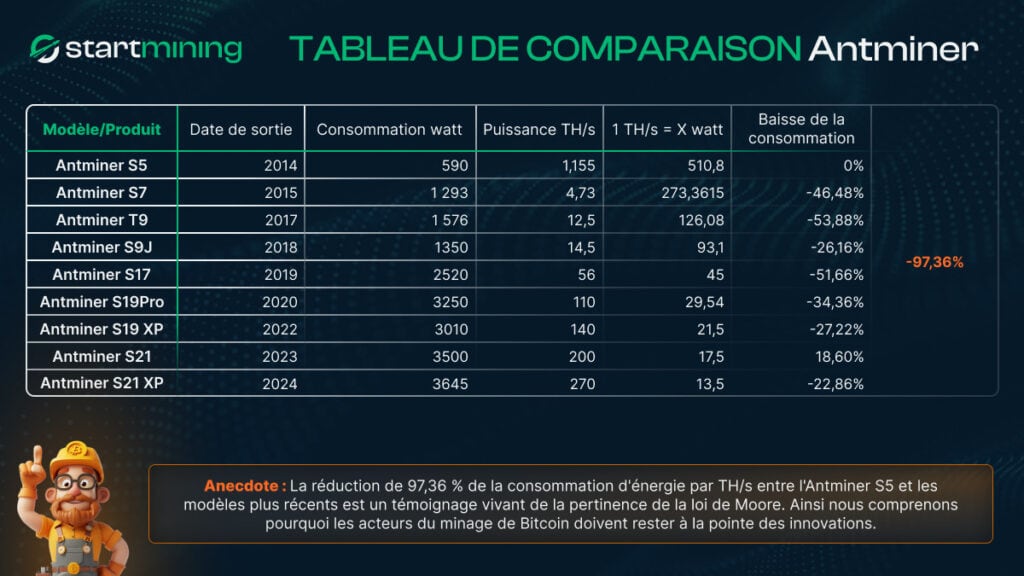
According to the Antminer evolution data, the energy needed to produce 1 TH/s of mining power fell by 97.36% between 2014 and 2024.
Conclusion
The evolution of Bitcoin mining, from its modest beginnings in 2009 to the ASIC era, is a perfect illustration of how technological progress shapes an industry. From the early use of CPUs to GPUs, then FPGAs, and finally ASICs, each step brought significant gains in efficiency and computing power.
The progress of ASICs is living proof of Moore’s law at work in hardware. This continuous improvement is crucial to miner competitiveness.
As technology keeps advancing, it is essential for Bitcoin mining players to stay at the cutting edge of innovation. Many miners, for example, modify their ASICs for more power or better efficiency. Wondering whether it makes sense to boost an ASIC’s hashrate through overclocking — or to improve its efficiency with downclocking instead? Our guide on ASIC overclocking vs. downclocking is for you.
Relentless innovation guarantees that the Bitcoin mining landscape will keep evolving, offering new opportunities and challenges to those who take part in this revolution. In the end, understanding and adapting to technological trends will remain the keys to success in the world of Bitcoin mining.
Is it better to buy or to mine Bitcoin? Find the answer in our next article.
At Startmining, our experts offer the best mining machines on the market. Explore our mining offers, with or without hosting.
Passez à l'action
Ready to mine Bitcoin with Startmining?
Browse our ASIC shop or simulate your profitability in real time.