Who Is Satoshi Nakamoto?
Ever since Bitcoin was created in 2009, one question has lingered in the minds of crypto and tech enthusiasts: “Who is hiding behind the pseudonym of Bitcoin’s creator, Satoshi Nakamoto — the person at the origin of the revolution and the rise of blockchain technology?” Still finding the world of crypto and mining a little blurry? See how we got here in our article on the history of money, from barter to Bitcoin.
The leading theories
Many identities have been attributed to Bitcoin’s creator (or creators) “Satoshi Nakamoto” over the years. Some far-fetched theories suggest a time traveler, an extraterrestrial, or even an NSA operation. More down-to-earth speculation points to a group of developers working together. Among the people named as possible Satoshi Nakamotos are billionaire Elon Musk, MtGox founder Jed McCaleb, Japanese mathematician Shinichi Mochizuki, Finnish economist Vili Lehdonvirta, and computer-security researcher Len Sassaman. One Craig Wright even claimed to be Bitcoin’s creator. More recently, an HBO documentary suggested that developer Peter Todd is the real Satoshi.
To this day, however, Satoshi Nakamoto’s true identity remains a closely guarded secret — and that may be one of Bitcoin’s greatest strengths.
The anonymity of Bitcoin’s creator: an undeniable advantage
It is genuinely crucial that Satoshi Nakamoto’s true identity stays unknown, for several reasons.
First, anonymity protects the DNA of his creations and preserves the integrity of the decentralized system he built. Being unknown, Satoshi cannot influence Bitcoin’s development for better or worse. Ethereum and the influence of its creator Vitalik Buterin are a perfect counter-example: Buterin plays a major role in developing the ecosystem and setting its strategic roadmap. Without him, Ethereum would keep moving forward, but probably in a very different reality than the one we know today. His contribution is beneficial, yet it still represents an ever-present risk.
Revealing Satoshi’s identity could undermine trust in Bitcoin and its legitimacy as a digital currency. By remaining anonymous, Satoshi Nakamoto also avoids unwanted attention, political pressure, and the risk of potential reprisals. By keeping his identity secret, he lets Bitcoin grow organically, free from the influence of outside interests — as seen with the U.S. elections and the “Trump Bitcoin, Make Crypto Great Again” slogan.
The mystery of Satoshi Nakamoto keeps fueling discussion and speculation within the cryptosphere, not least because of his war chest (over 1 million BTC mined). While some seek to crack the secret of his identity, others prefer to focus on the legacy he left behind: a revolutionary technology with the potential to transform the global financial system. With such potential, we can reasonably ask whether it is better to buy or to mine Bitcoin. Find out in our dedicated article.
The traces Satoshi left in Bitcoin’s earliest days
It all began on August 18, 2008… The domain name Bitcoin.org was registered anonymously. The Bitcoin adventure went public shortly after.
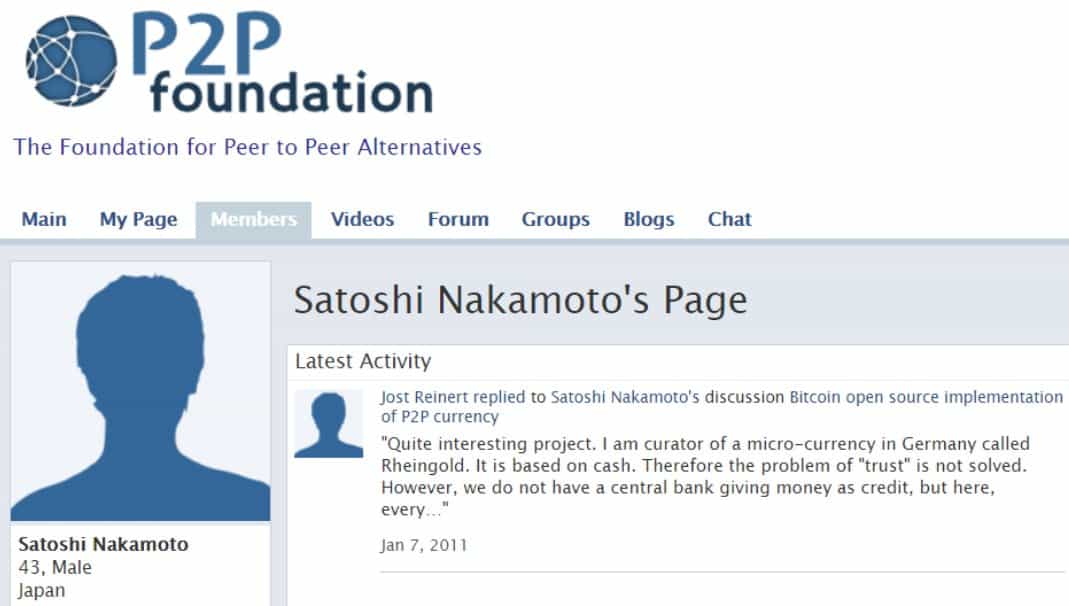
On October 31, 2008, an unknown user of the P2P Foundation forum, under the pseudonym Satoshi Nakamoto, published a paper titled Bitcoin: A Peer-to-Peer Electronic Cash System. In fewer than ten pages, Bitcoin’s creator laid out the theoretical foundations of how his cryptocurrency works. On his P2P Foundation profile, he claimed to be a Japanese man born on April 5, 1975. But the lack of any publication in Japanese and the quality of his English left the community skeptical.
Before publishing the white paper and launching the network, Satoshi Nakamoto had contacted Adam Back, the designer of Hashcash, which uses a technology related to proof-of-work computation. As the discussions went on, Back pointed him to Wei Dai, the designer of the B-money project. Satoshi contacted him on August 22, 2008, announced the upcoming release of his creation, and asked about the publication year of B-money. Around that time, Satoshi privately sent the Bitcoin code to Ray Dillinger and Hal Finney, each of whom reviewed a specific part of how the software worked.
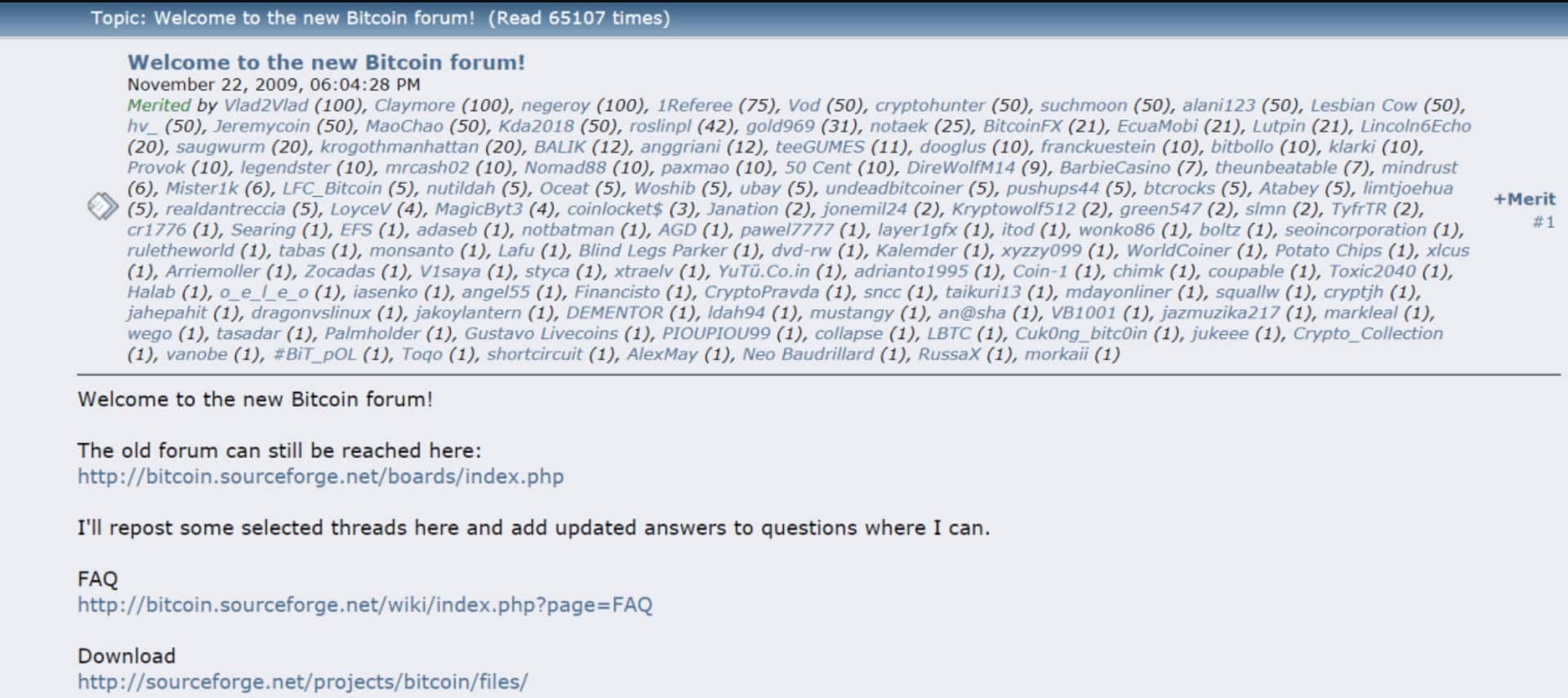
Shortly after, on December 10, 2008, Satoshi created a mailing list called “bitcoin-list” on SourceForge to manage public messages about his project. That list stayed active until the dedicated forum Bitcointalk.org went live in November 2009.
The launch of the Bitcoin network and Satoshi’s mining
By the time Bitcointalk.org was created, nearly 1.4 million BTC had already been mined. Most of them sat in Satoshi’s wallets and those of a few developers who joined the network at launch.
Bitcoin launched on January 3, 2009, with the creation of the GENESIS block — the start of the Bitcoin blockchain, a public, decentralized chain of blocks that records every transaction in a distributed ledger! The first miners joined the network, such as Hal Finney, who connected to the software version on January 10, 2009, and announced it on Twitter.
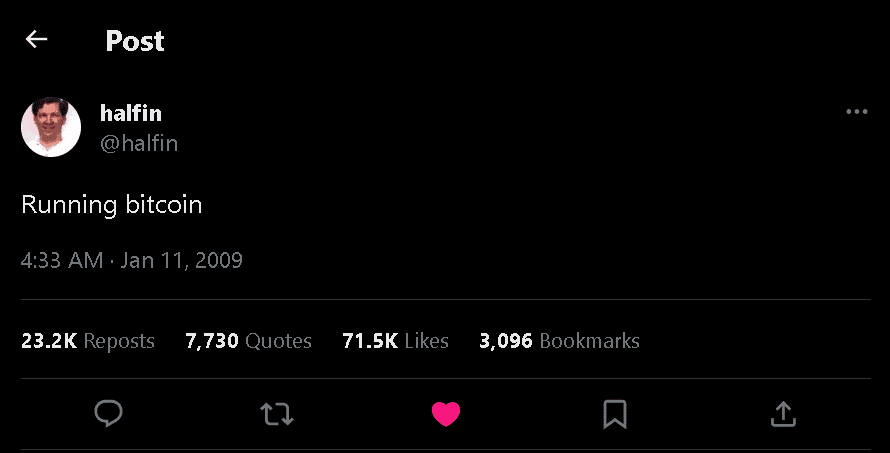
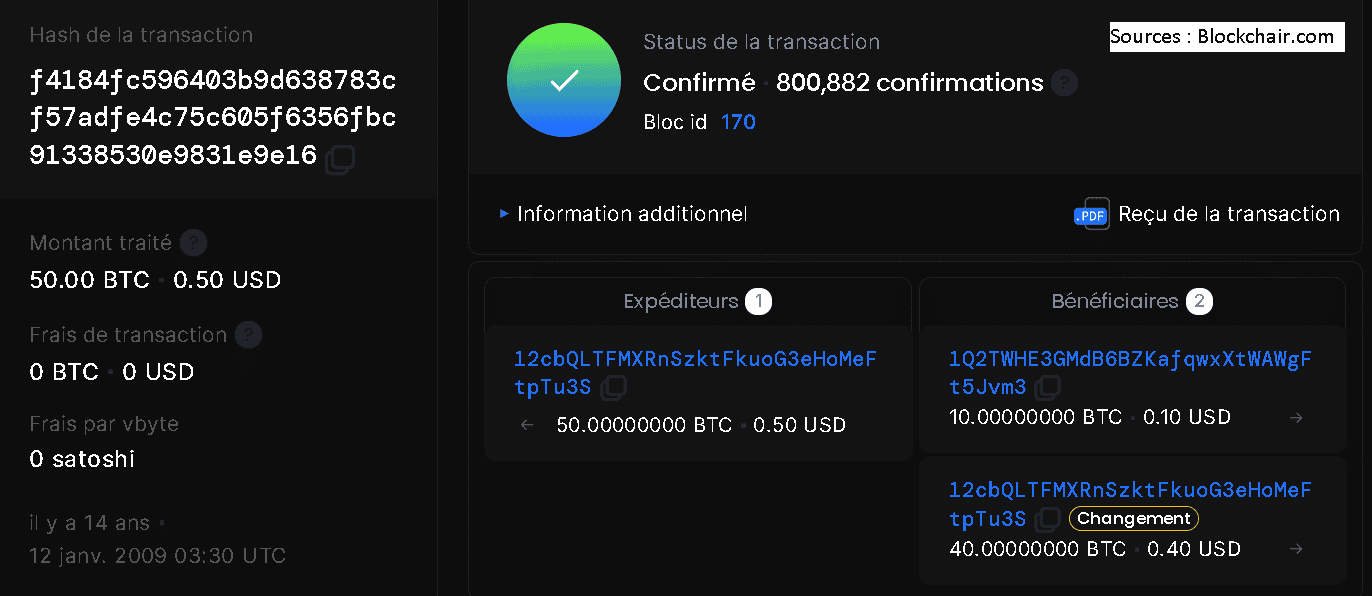
Two days later, he received 10 Bitcoins directly from Satoshi, inaugurating the network’s first transaction between two computers. The first transactions quickly followed, though most remained experimental.
Discover the incredible evolution of Bitcoin mining, from Satoshi’s early mining to today, in our article on the evolution of Bitcoin mining, from CPU to ASIC.
The last traces left by Satoshi Nakamoto
After the network launched, Bitcoin’s creator had to release bug fixes, steering development with the alert keys used to update the code. The users running the software remained the ultimate authority over the project, accepting or rejecting new implementation proposals. The number of developers and contributors grew quickly. They built a Mac version and suggested promoting Bitcoin through ads in specialized magazines. The beta phase was over!
In late 2010, Satoshi released his last public version. He removed his name from the copyright notice. Some time later, he updated Bitcoin.org with the names and emails of other developers: Andresen, Sirius, Laszlo and Nils Schneider.
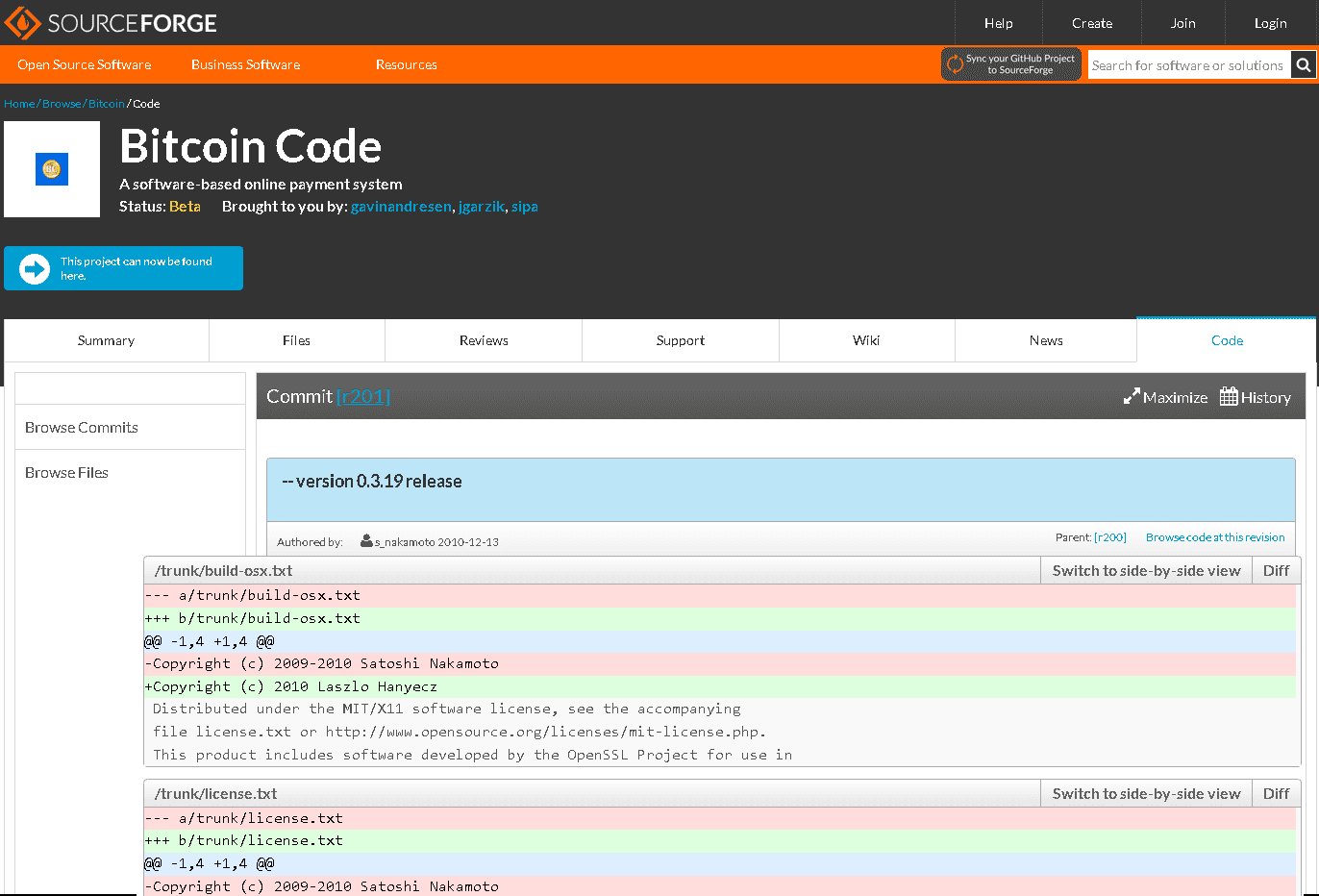
Before disappearing completely, he handed over development (the code-update notification keys) to the person who had long supported him, Gavin Andresen. He made the announcement official a week later. Satoshi would keep talking with his close collaborators until April 26, 2011, the date of his last private exchanges.
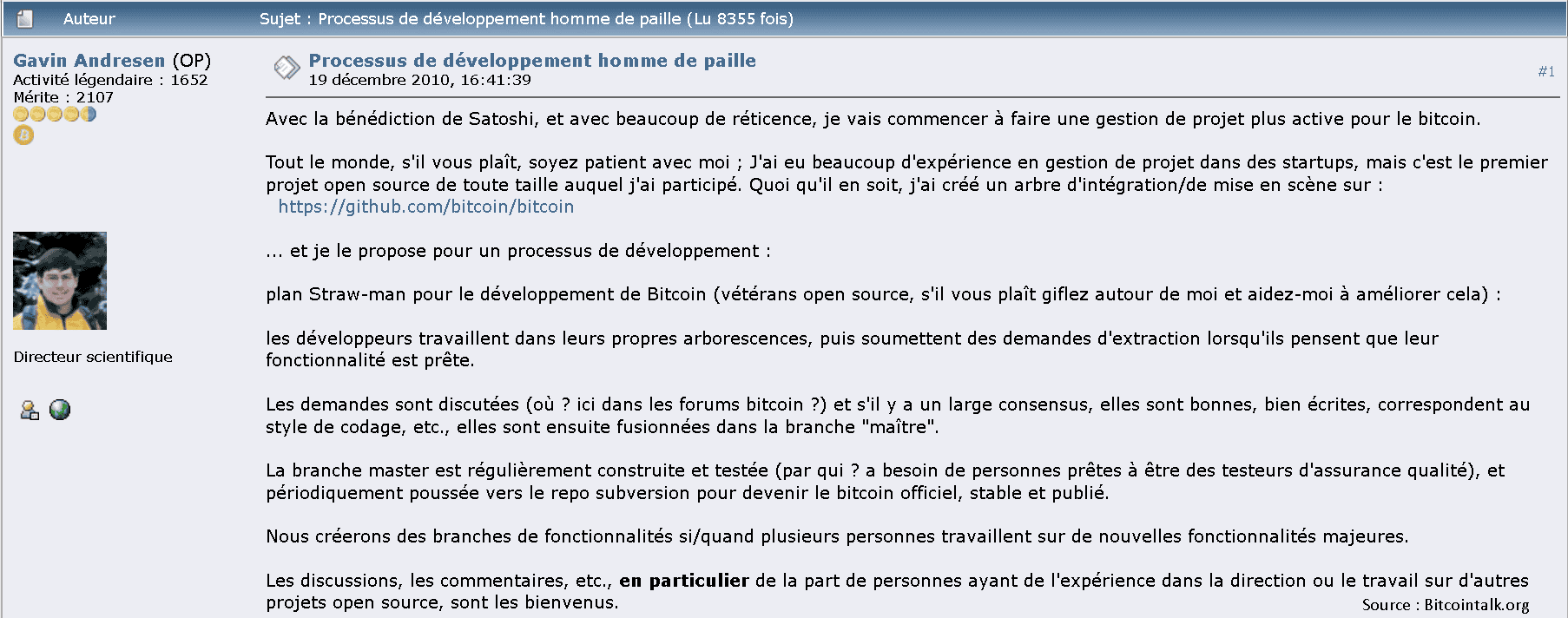
Private exchanges before vanishing
During his exchanges with Andresen, Bitcoin’s creator asked him to avoid questions about his identity. He wanted to prioritize the number of contributors and the open-source nature of the project.
Earlier, debates had taken place around the WikiLeaks affair, when the NGO had its payment methods cut off and its funds frozen. At the time, the topic resonated with the Bitcoin community, which saw a first real-world use case — unlike Satoshi…

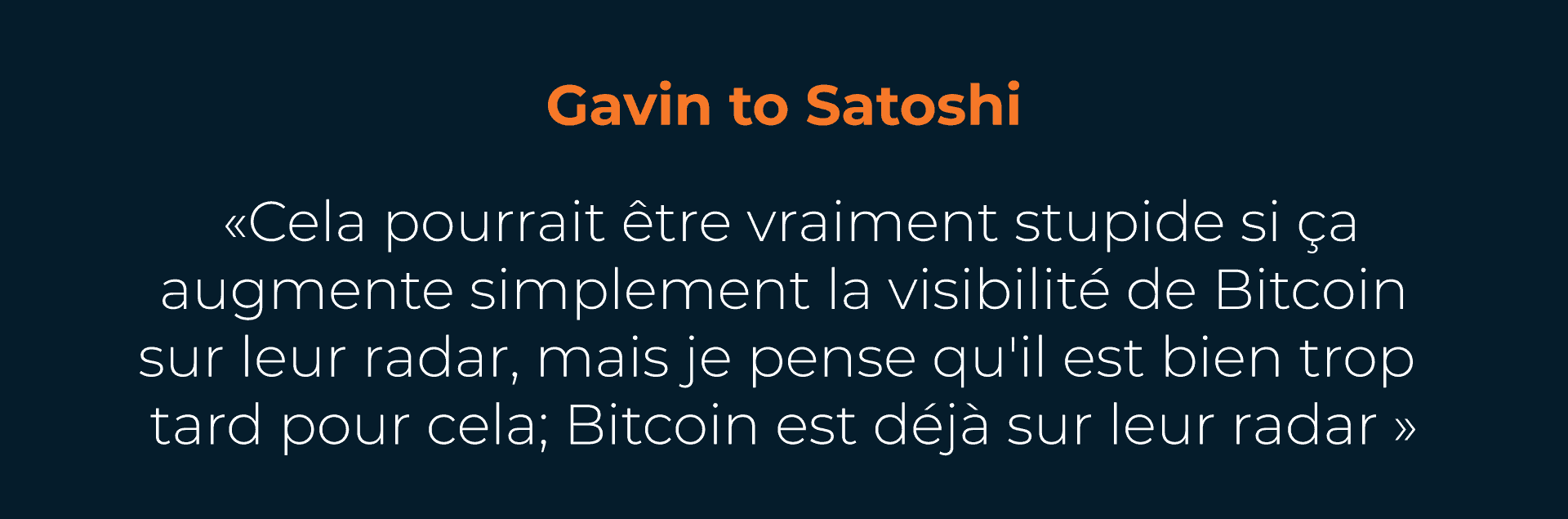
The reason for his disappearance fuels many theories — not least because, around that time, Andresen was considering discussing Bitcoin with the CIA. Aware of the risks of such an event, and of how far things had come, wasn’t it already too late?
Analysis and theories about the traces left by Satoshi Nakamoto
The Bitcoin community has analyzed Satoshi’s posts and code changes.
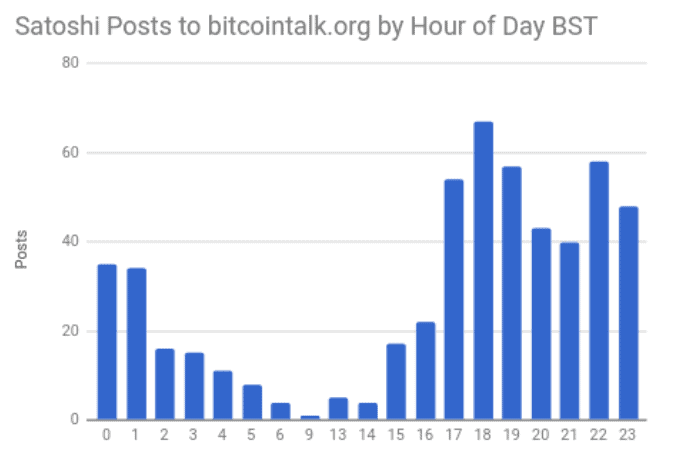
A Bitcointalk.org forum member named Stefan Thomas plotted the timestamps of Satoshi’s “traces.” His findings show that Satoshi never posted anything between 2 p.m. and 8 p.m. Japanese time.
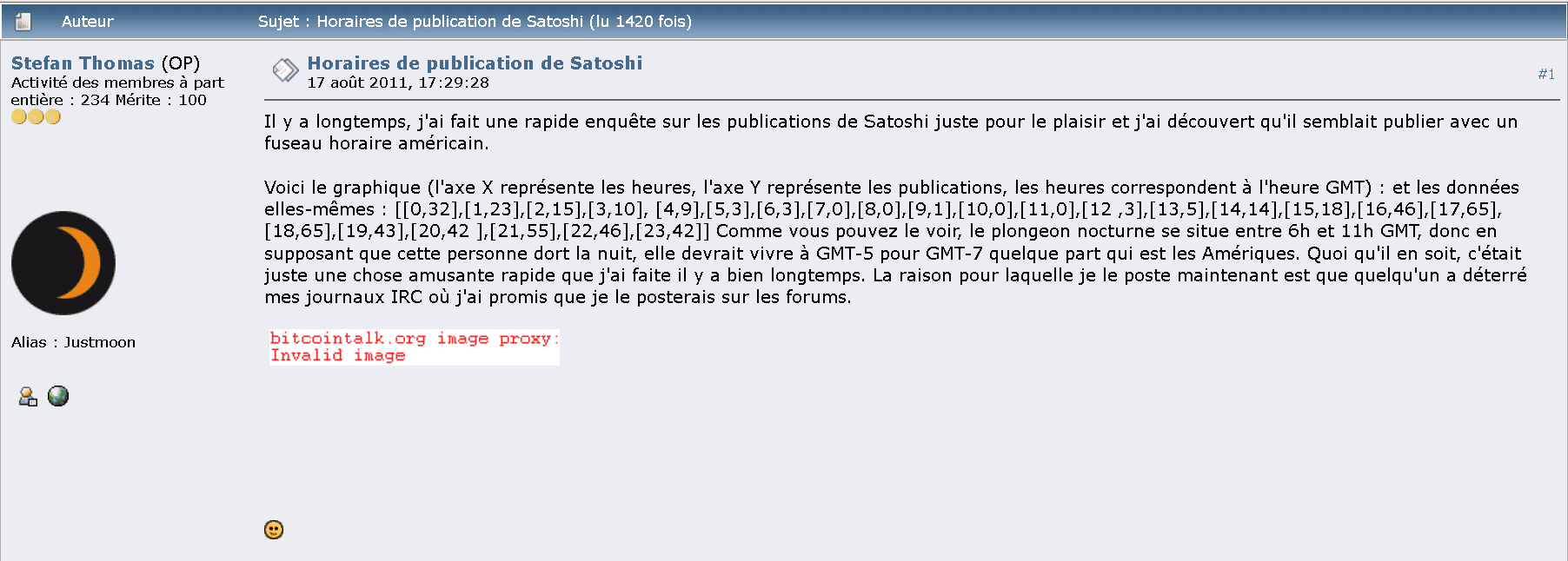
His hours of inactivity fall between 9 a.m. and noon (UTC), pointing to the Americas (the most likely) or Europe (in which case he would have gone to bed very late).
No personal data was ever revealed to authenticate Satoshi’s identity, despite his many exchanges with the community.
The theory of Hal Finney as Satoshi Nakamoto
One coincidence invites questions, tied to a landmark moment in Bitcoin’s development. When the white paper was published, Satoshi received two negative replies and only one positive one — from the esteemed Hal Finney, who received and connected to the first version of the software as early as January 10, 2009. Remember, two days later they inaugurated the network’s first transaction.
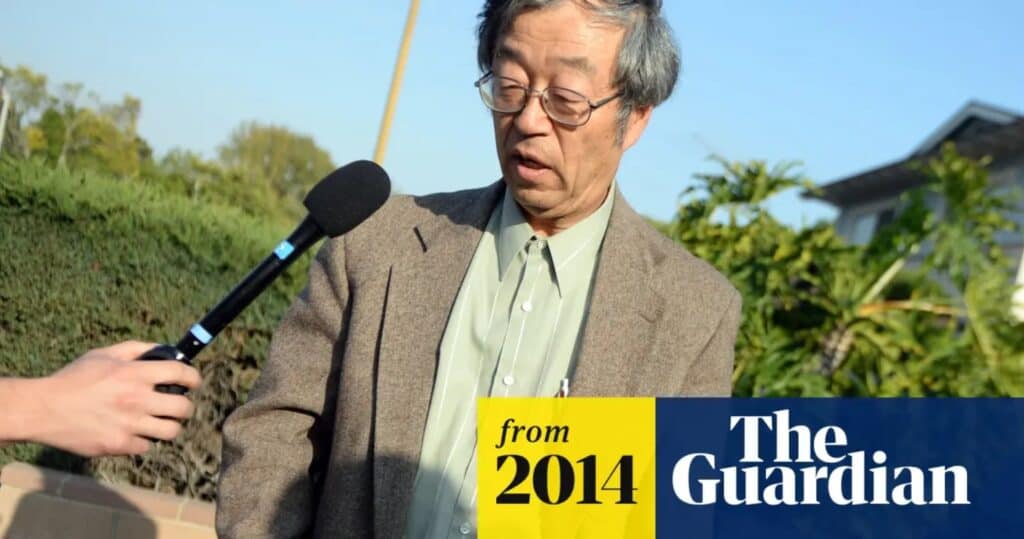
This story resurfaced three years later when journalists found a U.S. citizen named “Dorian Prentice Satoshi Nakamoto” living a few blocks from Hal Finney. Coincidence? Finney of course denied any personal connection to his neighbor Dorian, or to Satoshi himself.
But Dorian was quickly targeted by the media and could no longer even leave his home. The crypto community rallied and collected a treasure of 100 bitcoins, which it gave him as compensation! Dorian became, against his will, the symbol of the Satoshi mystery and a meme of the ecosystem.
Enjoyed this article? To learn more about the techniques miners use to boost their ASIC’s hashrate, see our guide on ASIC overclocking vs. downclocking.
Find our expertise on our website and discover our products and services.
Passez à l'action
Ready to mine Bitcoin with Startmining?
Browse our ASIC shop or simulate your profitability in real time.