How Do Bitcoin Mining Pools Work? (Part 1)

If you are interested in Bitcoin and how it works, you have probably already heard of mining pools. But what exactly are they, and why do they matter so much? That is what we will cover in this article. Still finding the world of crypto and mining a little blurry? See how we got here in our article on the history of money, from barter to Bitcoin. And if you are wondering whether it is better to mine other proof-of-work coins than Bitcoin, this guide is for you.
What is a mining pool?
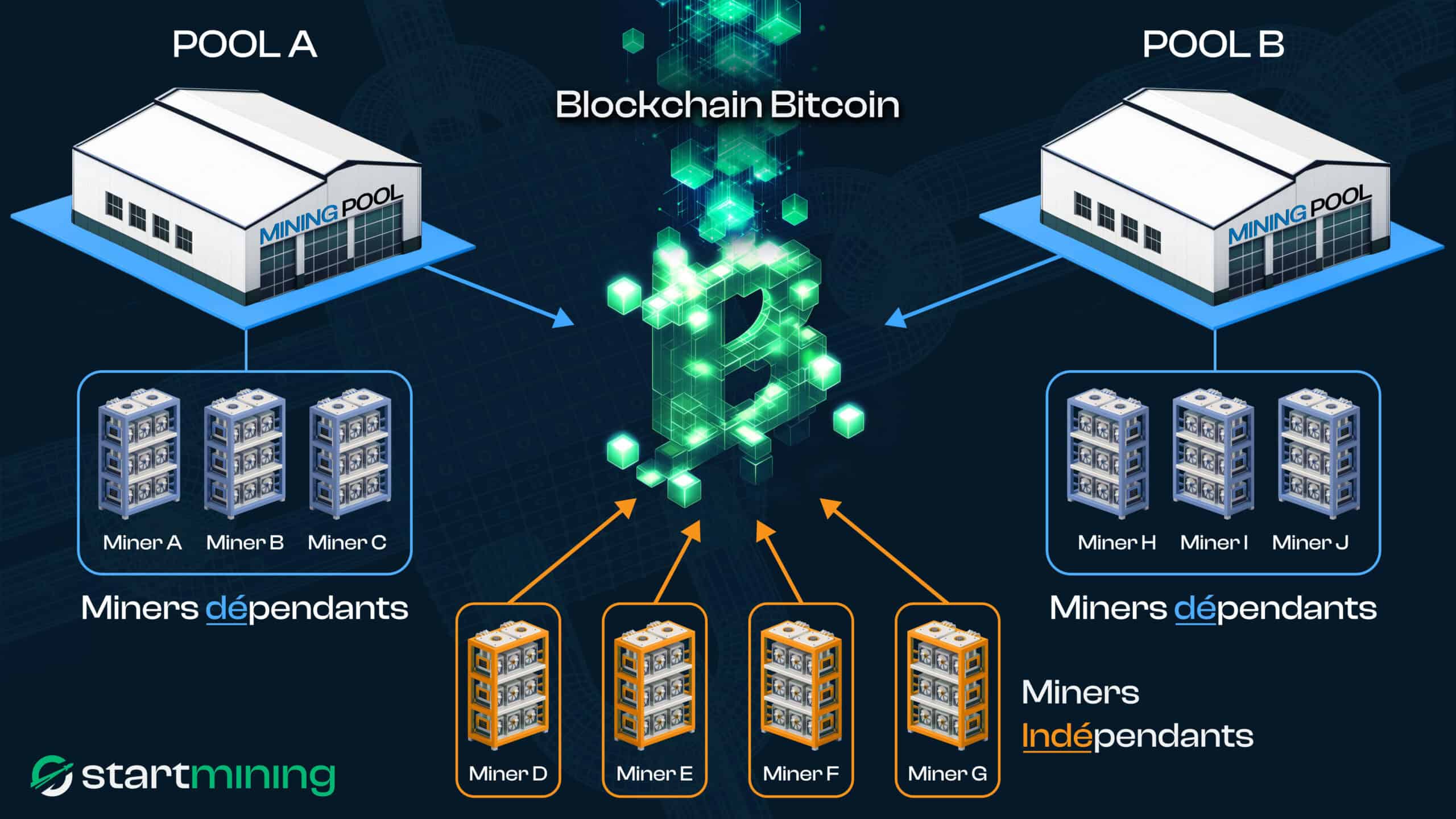
A mining pool is a group of miners who join forces and combine their resources to increase their chances of solving a block of transactions. Instead of mining solo — which can be extremely difficult — miners work together. This lets them share rewards far more regularly.
Why use a mining pool?
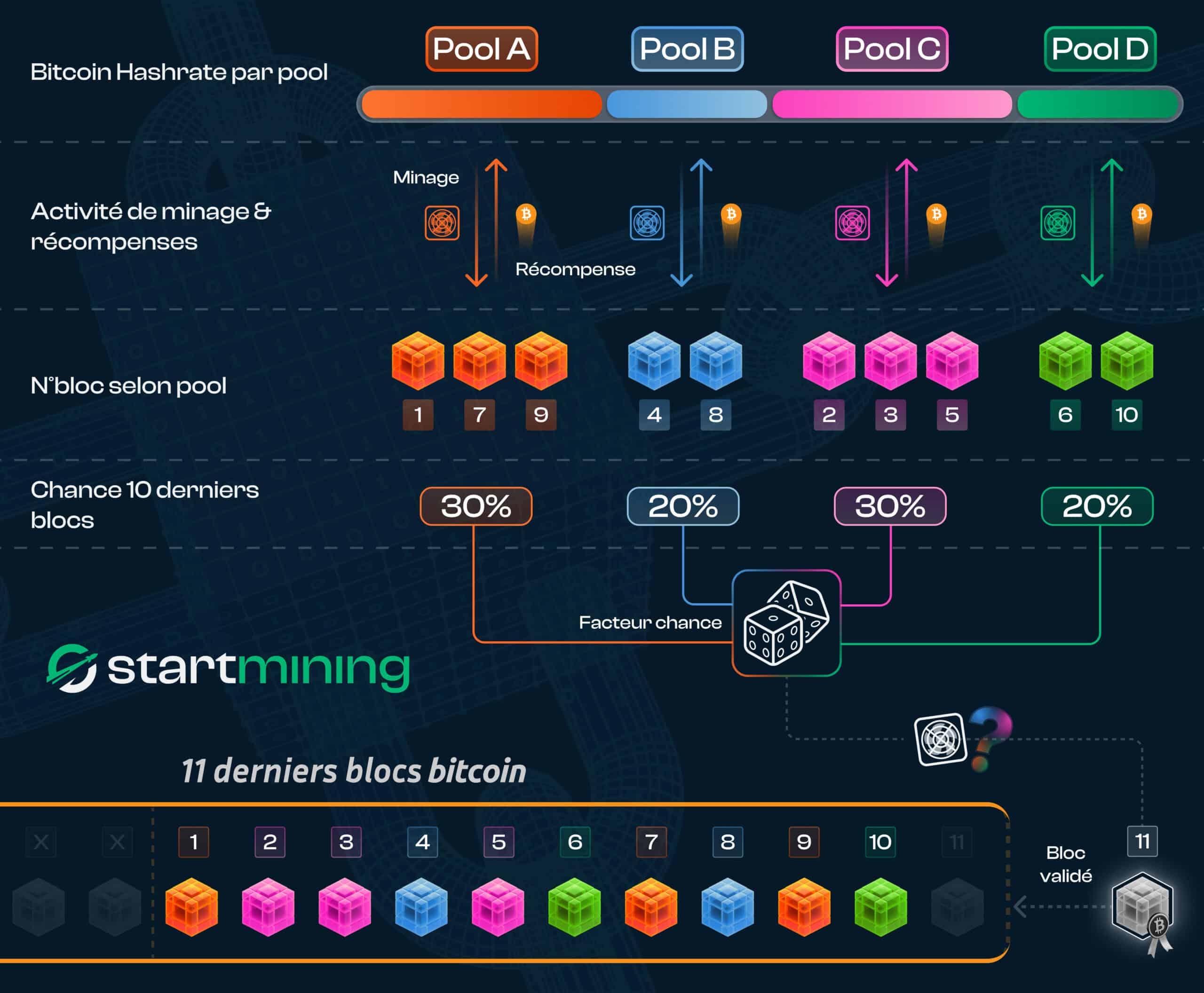
Higher chances of success
Bitcoin mining relies on solving complex mathematical problems, and the competition is fierce. A solo miner can go weeks or even months without successfully solving a Bitcoin block. By joining a pool, miners boost their odds of finding a block because they combine their computing power. Whether your hardware is new or used, is it better to buy or to mine Bitcoin? Find out in our guide on new vs. used Bitcoin ASIC miners.
Steadier income
In a pool, rewards are shared among all members. That means even if a miner never finds a block on their own, they still receive a small share — proportional to their power within the pool — whenever the pool succeeds. This gives pool miners more regular, less random income.
Access to technical resources
Mining pools are often run by experts who provide tools and resources: performance statistics, hardware-optimization advice, and even communities where members exchange tips. Wondering whether it makes sense to boost an ASIC’s hashrate through overclocking — or, on the contrary, to improve its efficiency with downclocking? Our guide on ASIC overclocking vs. downclocking is for you.
How does a mining pool work?
To join a pool, you simply sign up and connect your mining hardware to the pool’s server. There are many pools to choose from, each with its own rules and fees.
Once connected, your hardware starts working alongside that of the other members. The pool uses the combined computing power to solve blocks.
When the pool successfully mines a block, the reward (in Bitcoin) is distributed among all members in proportion to their contribution. Each miner receives a share that matches the computing power they brought to the pool.
To improve communication between participants and increase profitability, mining pools use a network protocol layered on top of the Bitcoin network called Stratum. The protocol was developed in 2011 by Marek Palatinus, who founded the first mining pool — originally named Slush Pool and now known as Braiins.
It is worth noting that Stratum is not a standard built into Bitcoin itself, but a standard for pool servers. A second version, Stratum V2, is currently in development.
Choosing the right mining pool
As we have seen, there are plenty of mining pools out there. Here are a few criteria to consider:
- Fees: pools usually take a percentage of earnings, so it is important to understand the fees before signing up.
- Success rate: check how often the pool finds blocks. In theory, this depends on the pool’s hashrate.
- Community and support: a good pool has an active community and solid technical support.
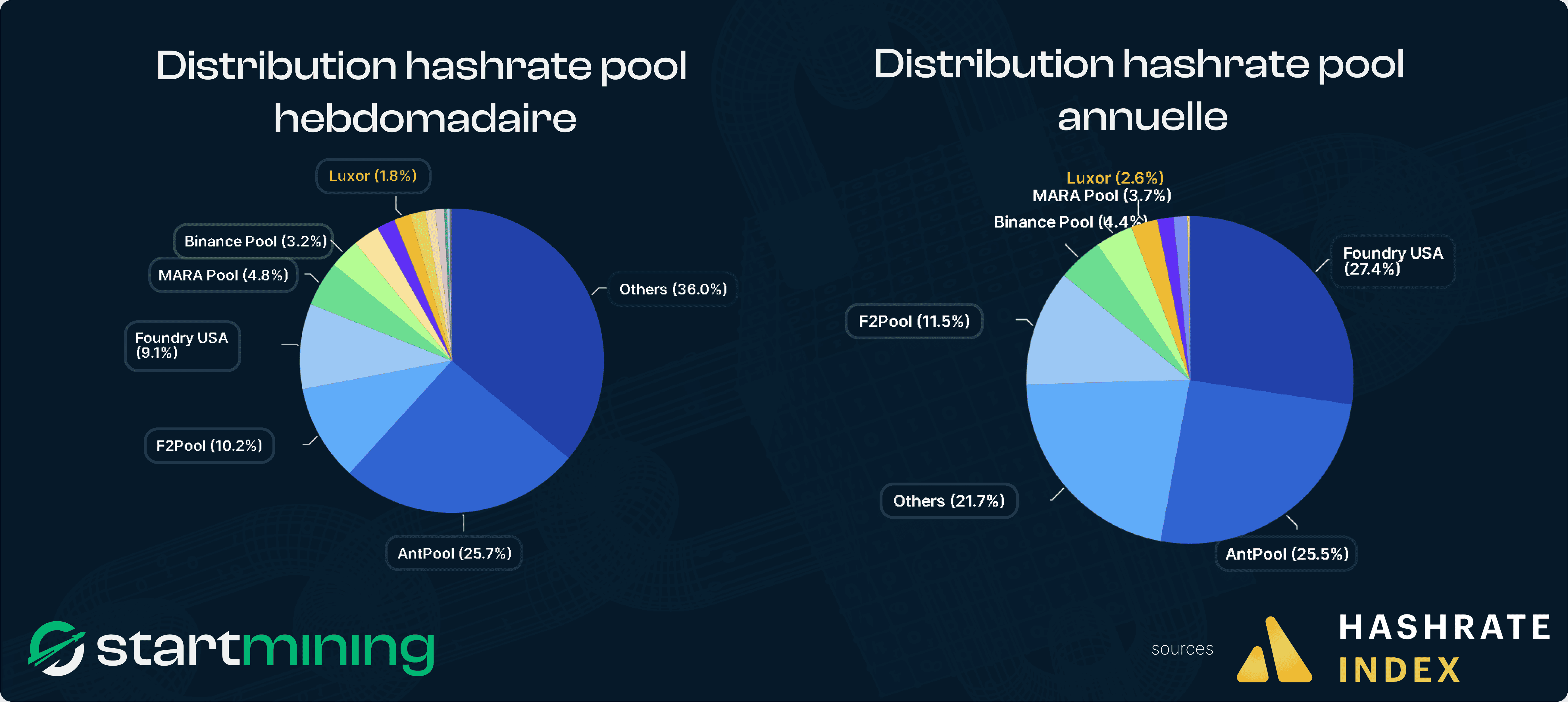
The hashrate distribution of Bitcoin mining pools in October 2024
There are many mining pools around the world, and the share of hashrate held by each one shifts depending on which pool miners choose at any given moment. It is not unusual to see a pool’s share of total power double — or halve — over the course of a year.
Where are Bitcoin mining pools located?
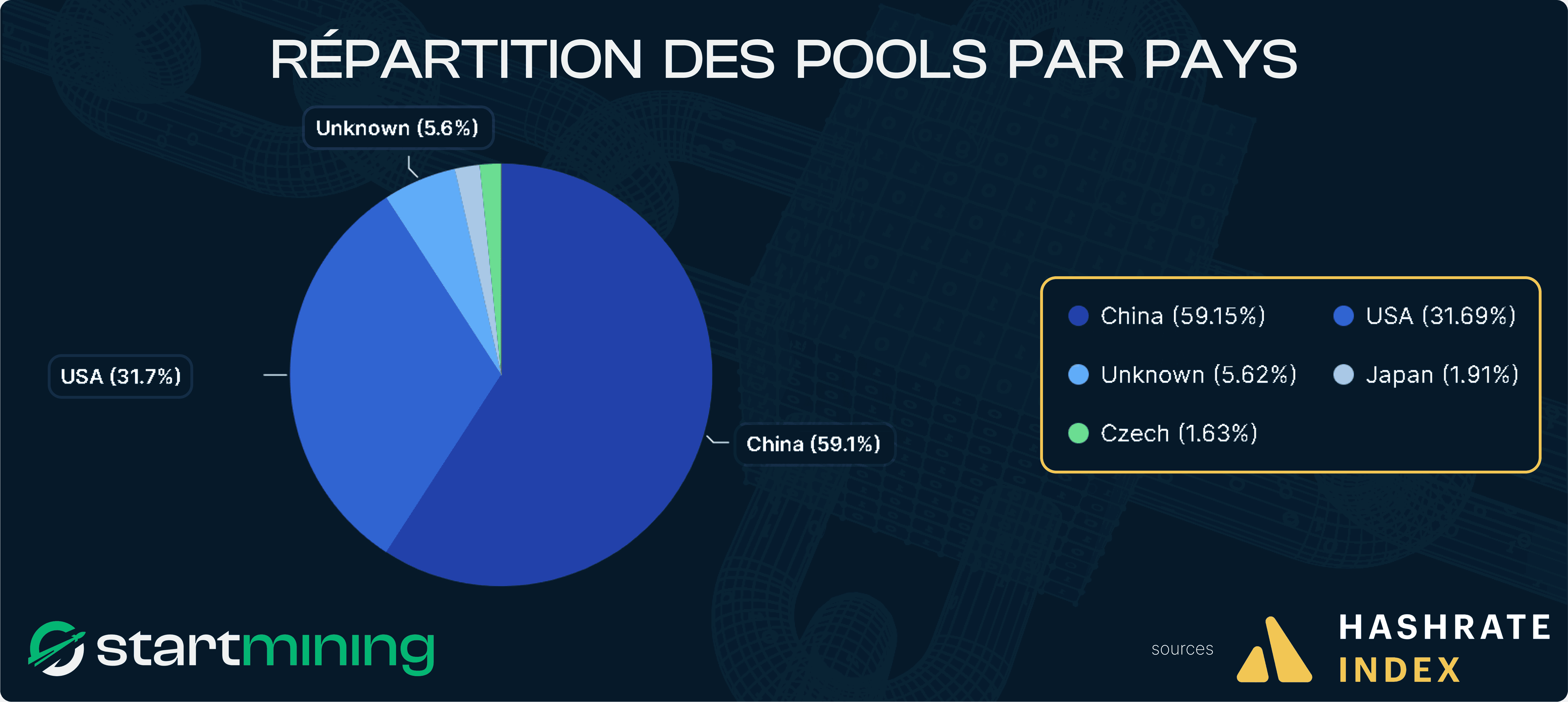
Although mining pools are digital infrastructure, they still depend on a geographic footprint. China has banned — or at least heavily curtailed — mining activity on its territory, yet the vast majority of mining pools are still Chinese in origin. This reflects the historical importance of China’s legacy in the development of mining.
Conclusion
Mining pools are a practical solution for miners who want to increase their chances of success and earn steadier income. By joining a pool, a miner no longer works alone but benefits from a community and expertise that can make all the difference. If you are new to Bitcoin mining, it is an excellent option to consider. Need a refresher on the fundamentals of investing in Bitcoin? Read our dedicated guide on the basics of Bitcoin investment.
In our next article, we will take a deeper look at the architecture of pools. In Part 2, you will discover the risk of network centralization and censorship by mining pools.
At Startmining, we work with Cruxpool, a French mining pool. Want to learn more about Startmining’s solutions? Explore our mining offers.
Passez à l'action
Ready to mine Bitcoin with Startmining?
Browse our ASIC shop or simulate your profitability in real time.