How Bitcoin Mining Pools Work (Part 2): 51% Attacks and Censorship
Understanding mining pools, part 2: Bitcoin network censorship and the 51% attack
In this second part, we dig deep into how mining pools work. You have probably already heard of the risk of a 51% attack on Bitcoin’s consensus, which its architecture and protocol security depend on. This rule has been a strength since the network’s birth.
Still finding the world of crypto and mining a little blurry? See how we got here in our article on the history of money, from barter to Bitcoin. And if you are wondering whether it is better to mine other proof-of-work coins than Bitcoin, this guide is for you.
The arrival and growth of mining pools somewhat changed how miners integrate the transactions contained in a block. Missed part 1 of our article on mining pools? Read how Bitcoin mining pools work (Part 1).
The 51% attack
If a mining pool exceeds 50% of the network’s power (hashrate), the risk of attack is ever-present. Such control over the network’s power would let an attacker omit new transactions by blocking their confirmations, and even reverse transactions. To go further, see Coinbase’s article on the subject.
The cost of a 51% attack: a game not worth the candle?
To carry out a 51% attack, you need to hold enough power. Today, that represents billions of euros of ASIC hardware — not to mention the infrastructure (mining farms, data centers) needed to run it. Such an attack also carries an energy cost that only rises the longer the attack lasts. In 2024, it is estimated at more than $1 million per hour, according to the crypto51 site.
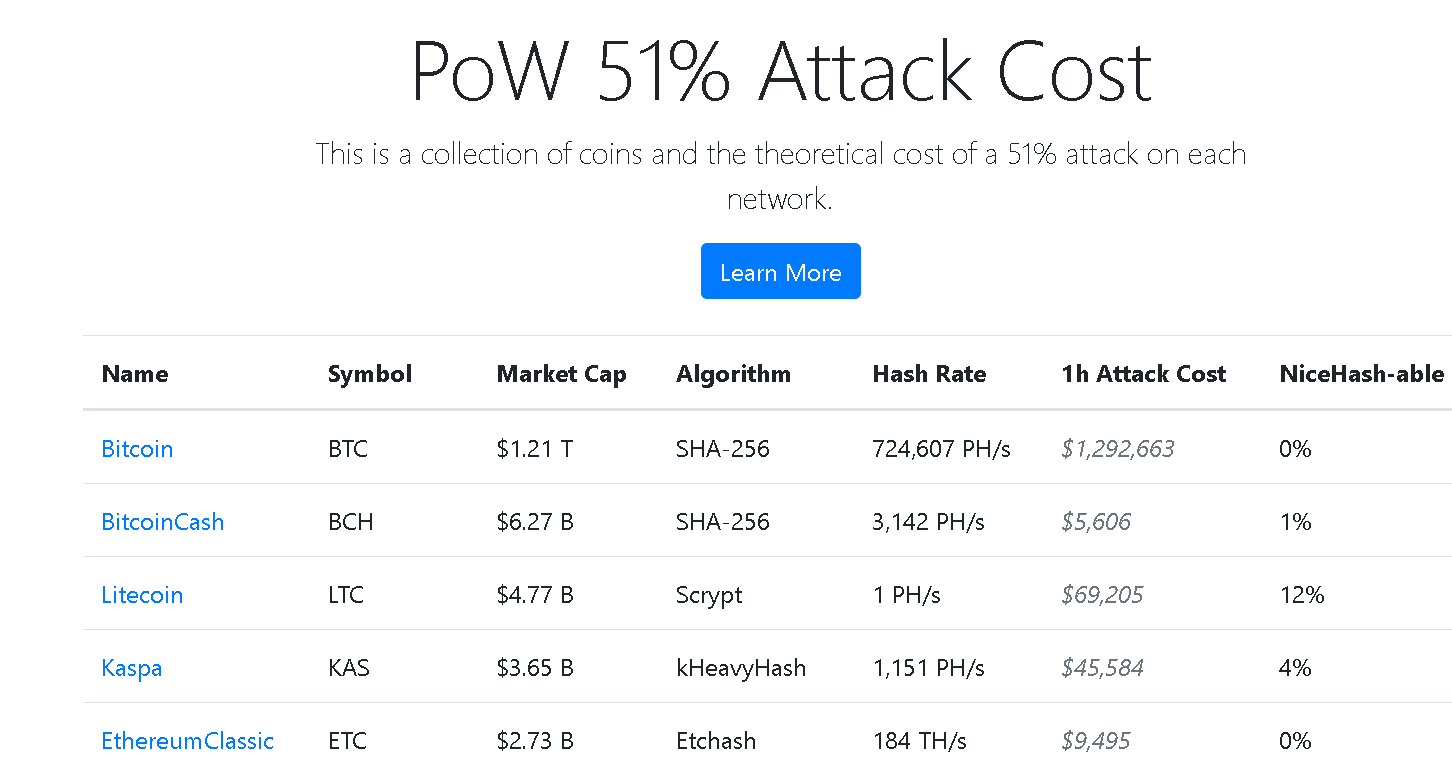
In practice, carrying out such an attack in 2024 is virtually impossible, both in terms of the ability to hold that much power and the energy cost of the attack itself. A miner or group of miners would have no interest in destroying their own source of income — especially since mining-related investments have amounted to several billion dollars a year since 2021. On that note, should you buy a new or used mining ASIC? See our comparison on new vs. used Bitcoin ASIC miners.
Network censorship and the example of mining pools
Beyond the 51% attack, there is the risk of network censorship through a pool’s selection of the transactions included in a new block. History shows that large pools have applied a filter to the transactions in the blocks they validate. Recently, it was proven that some mining pools such as F2Pool omitted transactions in line with the US OFAC policy. OFAC is a US entity that issues sanctions against countries or individuals breaking the laws in force, mostly relating to terrorism and money laundering.
Even though a mining pool can apply a transaction filter, it is the miners connecting to the pool who give it its power. In the event of censorship and risk to the network’s value, they can redirect their computing power to another pool that respects their vision and interests. Take the case of F2Pool, which angered miners after confirming it applied a filter to its transaction processing. The entity quickly had to backtrack and remove the filter, as reported by CoinDesk.
The architecture of mining pools: a risk to the network?
How a pool validates a block
A mining pool consists of a server that coordinates the miners’ work and interacts with the Bitcoin network. This server provides miners with “block templates” containing all the information needed to create a new candidate block (the transactions to include and the block header). Once the template is received, each miner starts looking for a valid proof of work by adjusting the nonce.
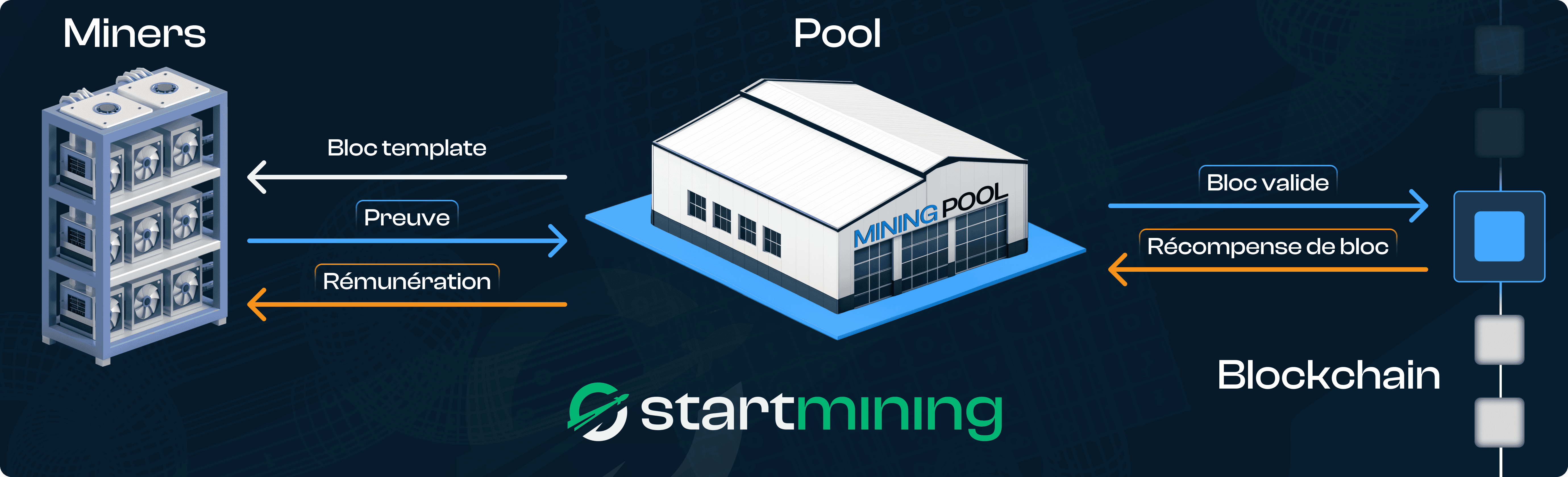
A pool must evaluate each miner’s level of participation over a given period to distribute rewards fairly. So the question is how to measure that participation. The simplest way would be to ask miners to send every hash they computed as proof of work. But if the pool had to recompute all those hashes, it would end up redoing the work the miners already did — which would cancel out a pool’s efficiency.
The concept of “shares” in pool reward distribution
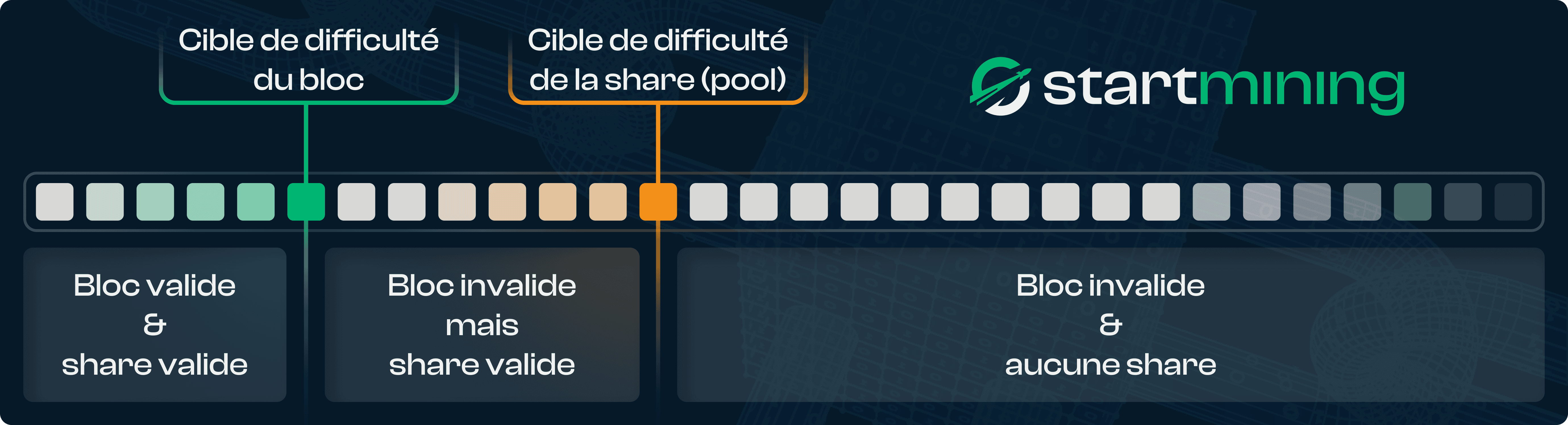
To simplify this mechanic, mining pools introduced the concept of “shares.” A share measures each miner’s contribution within the pool. It corresponds to a hash of the candidate block that meets a higher difficulty target (set by the pool) than Bitcoin’s real difficulty target. That is why shares that do not meet the pool’s difficulty target are not counted. This limits the number of checks the pool has to make. As a result, each miner has (in proportion to their power) as much chance as any other of finding a valid share, without the pool having to verify all of their hashes (valid and invalid shares).
Share payout methods in mining pools
There are several methods for paying out miners’ power within a pool. Here are the three main ones:
PPS (Pay Per Share): miners are paid for each valid share they submit, regardless of whether the pool finds a valid block.
FPPS (Full Pay Per Share): similar to PPS, but it also includes a share of the reward tied to the blocks found. This increases miners’ pay, especially when transaction fees rise.
PPLNS (Pay Per Last N Shares): this model pays miners based on their share contribution over a specific period. Payments are made only when the pool finds a block, which encourages miners to stay loyal and active over the long term.
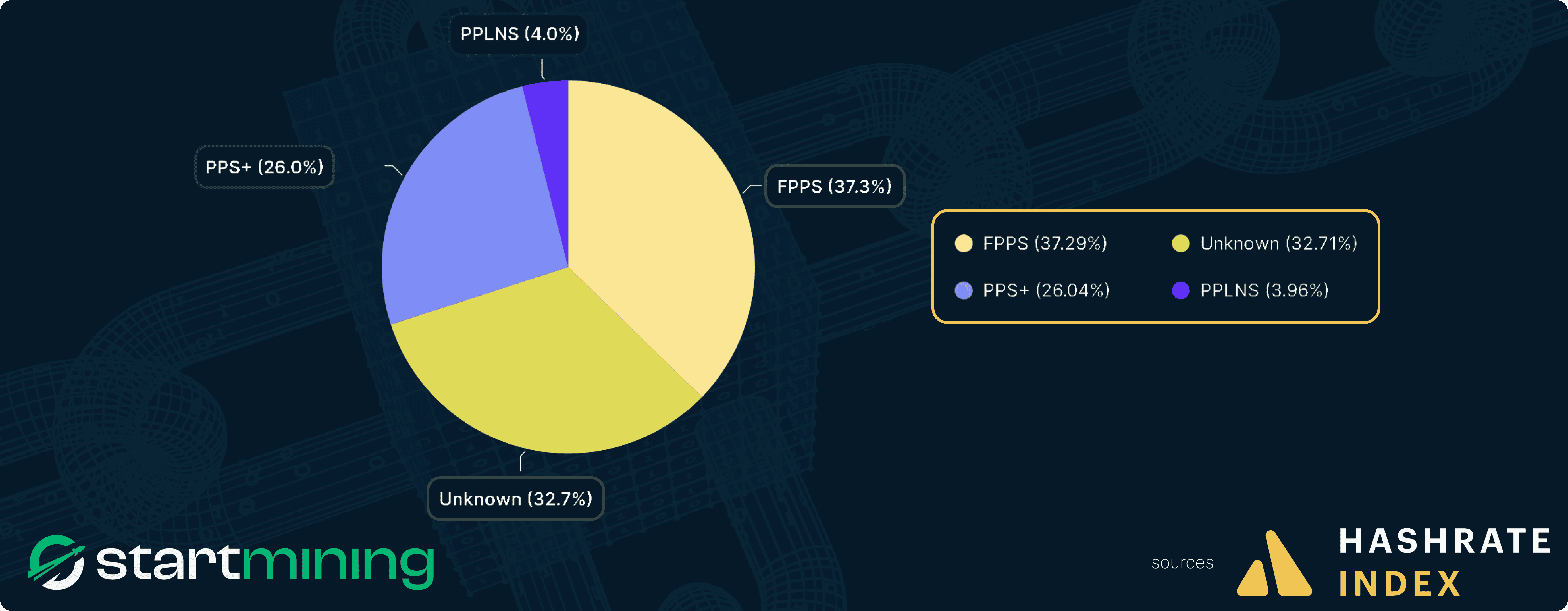
More than 80% of the network’s power relies on a payout method based on valid shares. With this method, it does not matter whether the pool finds a block: miners are paid for their work. That means a pool has to pay for shares in advance, all the way until it validates a block. This advance payment of rewards by the pool is an economic risk — it makes it hard for new pools to emerge and for solutions to decentralize.
DATUM and Stratum V2: the mining pools’ answer to Bitcoin network censorship?
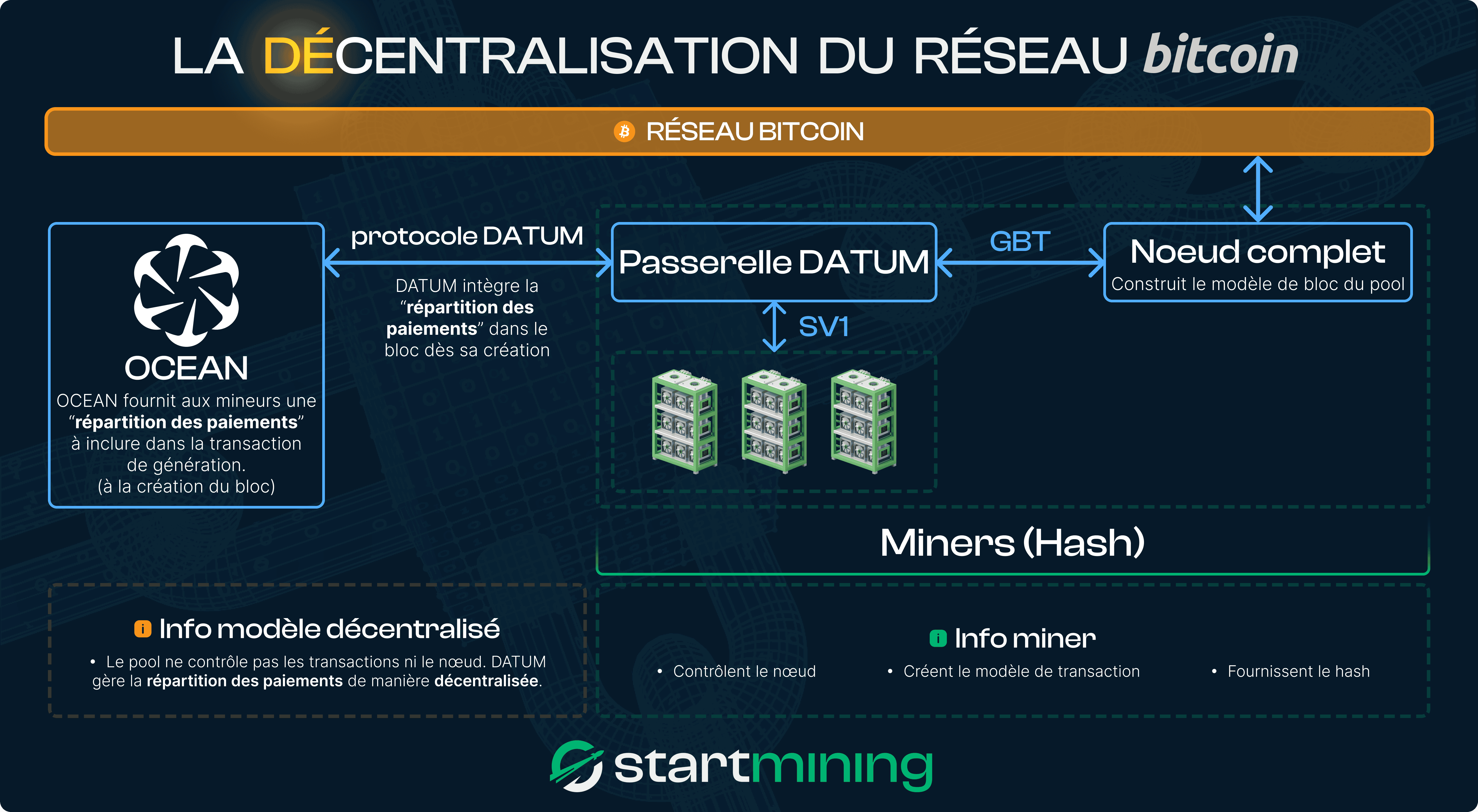
DATUM, short for Decentralized Alternative Templates for Universal Mining, aims at a return to the roots of mining. It is no longer the pool that selects the transactions, but the miners. Since version 2 of Stratum — the protocol used by most mining pools — miners can customize their block templates. DATUM has been available since October 2024.
As we saw earlier, miners originally created their own block templates. They acted as both miners and guardians of transaction inclusion. But as the hashrate grew, mining pools emerged to pool miners’ resources for more frequent payouts. In exchange, this led to a centralization of the block-creation process.
Today, most pools build the block templates for miners, while miners simply provide a valid hash. What’s more, according to research by 0xB10C published on X, most block templates depend on Bitmain — which owns the Antpool pool and its many proxies (BTC.com, Binance Pool, Poolin, EMCD, Rawpool, etc.).
This situation calls the principle of decentralization into question. If a few pools dominate transaction selection, they could censor operations — undermining one of Bitcoin’s core principles: censorship resistance.
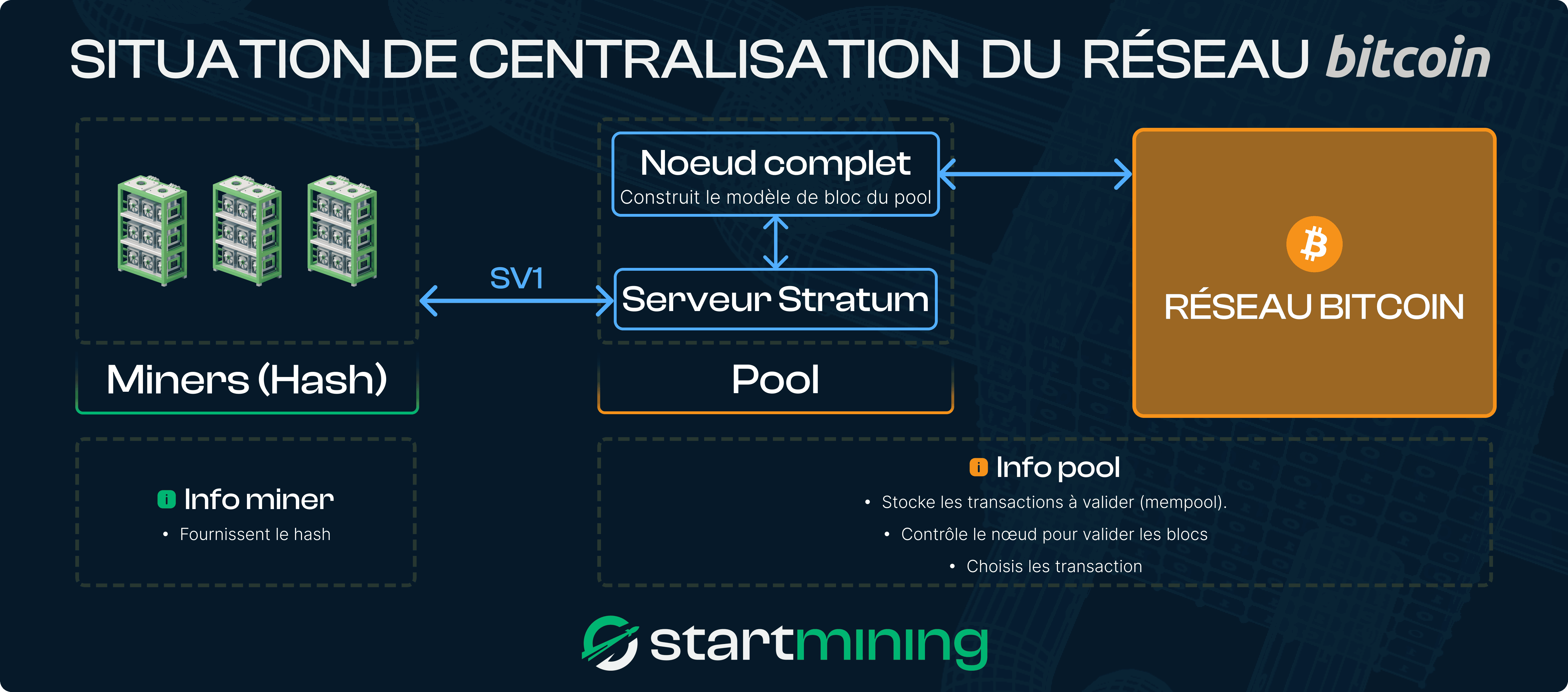
DATUM and Stratum V2: transaction selection by miners
This is where DATUM and Stratum V2 come in. These projects let a miner enjoy regular payouts while building their own blocks. By building their own blocks, miners could optimize the use of their mining resources — for example, by reducing the fees on their own transactions (reward payouts, etc.).
DATUM communicates directly with the mining hardware and a Bitcoin full node that manages block submissions. This means the block templates traditionally assigned to mining pools are now in the miners’ hands. Pools only retain reward management; payments are made directly to miners, with no intermediary. As a bonus, the OCEAN pool, which pioneers the use of DATUM, offers a 50% fee discount for its users.
The public beta of DATUM launched on October 18. Those interested can learn more on its website, and contact options are available for anyone who wants to point their hash to the OCEAN pool.
Conclusion
The current dynamics of mining pools raise crucial questions about the security and decentralization of the Bitcoin network. The 51% attack, while theoretically possible, is becoming increasingly impractical because of its astronomical costs — not to mention the required infrastructure. Yet the risk of censorship by mining pools remains a concern, as the recent F2Pool example shows.
The rise of methods like DATUM and Stratum V2 marks a significant step toward decentralization. They let miners regain control over transaction selection. By giving miners back the ability to build their own blocks, these innovations could restore the very essence of Bitcoin: its censorship resistance. As the technology evolves, it is essential to keep watching these developments to ensure the network’s security and integrity over the long term.
At Startmining, our team handles every step needed for operations to run smoothly. Ready to get started in Bitcoin mining? Explore our mining offers.
Buy or mine Bitcoin? Find the answer in our article on buying vs. mining Bitcoin.
Passez à l'action
Ready to mine Bitcoin with Startmining?
Browse our ASIC shop or simulate your profitability in real time.